Women with disabilities: Health care barriers by Rosemary Musachio

Rosemary Musachio, Chief Strategic Officer

Several years ago I asked my mom’s gynecologist if she could give me a routine pelvic examination.  She said she would have to put me under anesthesia to perform the exam because my cerebral palsy would not allow my body to hold still.  Although her reply was cordial, it made me feel demeaned, as if I was a second-class citizen.   Couldn’t she have her medical assistant hold my legs while she examined me?  In fact, that would have been a reasonable accommodation under the Americans with Disabilities Act (ADA).

This is the kind of treatment that women with disabilities usually face regarding their health care.  According to the Center for Research on Women with Disabilities (CROWD), we have more difficulty obtaining health care than non-disabled women.  The National Study of Women with Physical Disabilities supports this, stating that we are less likely to have pelvic exams than women without disabilities.

Besides attitudinal barriers, we also face physical obstacles in doctors’ offices and hospitals.  For example, when I get a mammogram, I have to become a contortionist.  I have to put one arm upright leaning against the mammography unit, hang on to the bar with the other hand, and rest my uplifted chin against the front of the machine.  Include the fact that my body has difficulty keeping still and this almost pain-free routine exam becomes a very uncomfortable feat.  Not only am I nervous about the mammogram results, I’m also afraid that I’ll bump my face against the machine.  My incidents are not unique.  Cases exist where women with disabilities were duct taped to mammography machines.  Besides the discomfort, an inaccessible mammography machine may cause unreadable x-ray images, for the patient may move and cause one or both breasts not to be x-rayed correctly.  Consequently, potential tumors may be overlooked.

Struggles that women with disabilities face regarding healthcare stems from several reasons.  (These reasons also can pertain to men with disabilities.)  First, many medical professionals are ignorant of who we really are.  Some think we must be asexual.  Because we cannot walk or we have muscle spasms, they assume we also cannot use our bodies to love others or procreate.  So they think our intimate organs do not need preventative or medical care. Some doctors suggest hysterectomies to eliminate the hassle of menstrual cycles, assuming we don’t have the desire to become mothers. If we get breast cancer, we may not be offered reconstructive surgery because many doctors don’t see us as having female bodies but as having disabled ones.

Lack of training also contributes to health care issues for us.  Take the GYN incident above.  If the doctor knew how to give an exam to a woman with cerebral palsy, she wouldn’t have suggested the anesthesia or refused medical care.  Medical professionals should know how to gently stretch a woman’s legs if they are spastic or place a woman with spinal conditions in comfortable positions during an exam.  These techniques should be taught in medical school.  The patient also could inform the medical professional about ways to make her feel comfortable and relaxed as possible while she is being examined.

Financial issues and logistics are other obstacles that women with disabilities have to overcome to receive proper healthcare.  Many women with disabilities are on Medicaid and Medicare, which deters physicians from accepting their cases.  CROWD reports that even if women with disabilities have private insurance, many insurance companies may not pay for specific prescriptions, procedures, therapies, or assistive devices.  As an example, insurance may not pay for estrogen therapy because it is not considered a medical necessity.

Although Title II and Title III of the ADA require medical facilities to have accessible medical equipment, many still are not complying.  It is like a double-edged sword.  Hospitals and doctors may not invest in such equipment because patients with disabilities are few, while we don’t go to these facilities because they lack accommodations.  An accessible gynecological exam table, for instance, that can be lowered for easy wheelchair transfers costs between $4,000 and $10,000.  While this is expensive, it can be offset with tax incentives.

27 million women in this country and 16% of the world’s women have some kind of disability.  As populations become older and live longer, many other women will develop debilitating conditions.  Medical facilities and professionals need to realize women with disabilities are not in the minority.  More importantly, they must know that we are needed as daughters, sisters, friends, wives, mothers, and productive members of society.  So proper healthcare is vital to help us continue fulfilling these roles.

Yet, the responsibility of obtaining health care also lies with us.  We should tell doctors, medical assistants, and nurses how they could assist us in receiving the best care possible.  If they refuse to comply, then we should seek legal or other public action to ensure that all women with disabilities get the care that they deserve.


PR: Debra Ruh, the newest addition to the Huffington Post’s Blog team


Debra Ruh, CEO of Ruh Global Communications, newest addition to the Huff Post Blog

Ruh Global is excited to announce that Debra Ruh is the newest addition to the Huffington Post’s Blog Team. In her first blog, How Much Should We Value a Person With Disabilities? A Tribute to Jean Dewar, Debra introduces her daughter, Sara Ruh and Jean Dewar, a woman born with a disability at the turn of the century. It was a time where wide-spread use of sign language was very limited and when those with disabilities were treated quite differently. Debra Ruh addresses the similar opposing factors that Sara and Jean have faced, being women with disabilities. Ruh does so, while providing insight on the injustice that people with disabilities were challenged with.

Read the complete article at Huffington Post.
For all blogs by Debra Ruh visit her Huffington Post Profile.


Press Contact:

Debra Ruh, CEO
Ruh Global Communications
18122 Vontay Rd.
Rockville, VA 23146, USA
(804) 986-4500
Debra@RuhGlobal.com
www.RuhGlobal.com

Disability inclusion in the workforce – Training & finding champions

Debra Ruh, CEO of Ruh Global Communications, newest addition to the Huff Post Blog
Debra Ruh, CEO of Ruh Global Communications

The 25th Anniversary of the ADA Series: Disability Inclusion in the Workforce – Training & Finding Champions

Training will save an organization a lot of time and effort as well as reduce risks. Disability inclusion should be integrated into all corporate training, writes Debra Ruh.

inclusion at the workplace for persons with disabilities

– To see the full article by Debra Ruh, visit G3ict

Marketing to persons with disabilities is a business advantage

Debra Ruh - CEO of Ruh Global Communications
Debra Ruh – CEO of Ruh Global Communications

25th Anniversary of the ADA Series: Marketing to Persons with Disabilities is a Business Advantage

Making it possible for stakeholders with disabilities and age-related limitations to access your goods and services is not only an important part of complying with federal – as well as international — accessibility standards but also a strategic aspect of any organizational management plan.

Elderly men use Smart-Phones
Market opportunities have grown tremendously in the 25 years of the Americans with Disabilities Act. This is no longer a potential marketplace, but an exponential one.

– To see the full article by Debra Ruh, visit G3ict

Ruh Global Communications announces podcast by Kevin Ruh

I am currently in the process of making the first Ruh Global Communications podcast. As a long time podcast listener, I have always thought of dabbling in the world of podcasting. Luckily everyone here at Ruh Global was excited when I presented the idea of making our own podcast. The subject that I am hoping to explore is disability in our world and from the viewpoint of those with disabilities. I am still in the process of putting out my first book about tattoos and those with disabilities. I have collected a bunch of really great stories from those who have been nice enough to share their experiences and opinions with me. I think each podcast will have a spotlight on at least one of these stories.

Kevin Ruh
Kevin Ruh

I am very interested in the idea and taboo of tattooing as I have many myself. I am also part of the community of persons with disabilities.  To me they blend together to create an easy crossover. Most of the responses have been about the empowerment that one feels when they fully express themselves in the ways they like. Getting a tattoo is definitely not for everyone. Simply having a disability does not denote that you would never want to get a tattoo. Some have a stigma of both tattoos and disabilities. Some believe you must be a criminal to have a tattoo. Some also believe that those with disabilities are not capable of deciding a decision like getting a permanent tattoo by themselves. Unfortunately there is a lot of ignorance out there. Fortunately we can dispel this ignorance through immersion and teaching. People are not sure what to think sometimes and need a context to be comfortable.

When you see a person who has a tattoo on the street, chances are they did not get that tattoo for you. It was a decision they made for themselves to make them look how they wanted. Those with disabilities are simply people and why the heck should they not be getting as tattooed as they feel like? If it makes you uncomfortable to think of someone with a disability choosing for themselves, then you must learn to open your mind.

Sara Ruh’s dolphin tattoo done by Brandon Saunders
Sara Ruh with artist Brandon Saunders

 My sister has a tattoo on her ankle of a dolphin jumping out of a wave. I have over thirty, and not all are as cool as my sister’s dolphin. My sister also has down syndrome, no one told her to want to get a tattoo, she just wanted a tattoo because she thought they were cool. She went with our mother to a local tattoo shop and they felt out the comfort level of the artists around tattooing someone with down syndrome. My mother thought there may be some who would feel uncomfortable, but found the opposite. The artist they first spoke with was totally up for the tattoo. Not even the bat of an eye, because he understood that she was simply a client just like any other. The only thing that was any different was that my sister was having to get permission from her mother before getting a tattoo. Most of us just come home one day with ink in our skin, much to the dismay of our parents. My sister still visits her tattoo artist when she is near the shop to show off how well it healed on her. He is always happy to see her and is very kind. So before you pass judgement on someone who has a neck tattoo, think about how you may be the one with a closed mind who is not seeing the book beyond its cover. Things are not always as black and white as they seem and simply expressing yourself is no crime.

Our country needs to be educated on how to deal with one another on a personal basis. Hearing stories of police that have shot and killed someone who is mentally ill or seeking help for a mental health issue scares me horribly.

The recent incidents of people like Kristiana Coignard have weighed heavy on my mind. I hate to think that if our police forces were better able to talk people down rationally we would not have arrived at outcomes where emotion and violence have taken over a situation.

Kristiana Coignard
Kristiana Coignard

Coignard’s story is one that should not have ended in her death. Family says that she was simply seeking mental health help from the police. Instead she was seen as a threat, she was a slender 17 year old girl, and shot dead in the lobby of the police station. Hearing about this and other similar stories such as the schizophrenic man in dallas who was killed by the police after coming to the door holding a screwdriver and the man who had down syndrome who was killed by police in a movie theatre.

Imagining my sister with down syndrome in a public place, afraid, yelled at by police officers, I can only imagine her reacting in an erratic way. I hope to god that she would not be gunned down for not obeying orders screamed at her in the heat of the moment. She processes stress differently and slower than most. This should be considered by police when dealing with anyone.

People have all types of different processing methods in their own minds. Especially those who have a mental disability, invisible disability, so many ones we cannot see. Wheelchair users are an example of those with visible disabilities, but there are many many invisible disabilities. If we are to trust in our police forces and not fear their presence then we need to train them to deal with any situation. Dealing with someone with emotional disabilities can be tough, but is not impossible, nor should it be treated as impossible.

I would love to hear from the readers of this as well. I have asked my followers on Twitter to give me feedback or opinions to discuss on the podcast. If you have any tips, ideas, opinions or concerns please feel free to e-mail me at kevin@ruhglobal.com I think discussing these topics further will help us all. Thank you for taking the time to read my blog, I hope to hear from you soon.


To learn more about Ruh Global Communications, please visit www.RuhGlobal.com


Programmatic Advertising.org interview with Debra Ruh

Debra Ruh - CEO of Ruh Global Communications
Debra Ruh – CEO of Ruh Global Communications

Debra Ruh is a digital marketing professional who enables people with disabilities’ voices to be heard and included in marketing and communications outreach. As the founder of Ruh Global Communications, a strategic communications and digital marketing firm, she strongly believes that social media empowers a diverse array of perspectives to be shared, and is optimistic about the future of digital.

Her business intrigued us, and we just had to hear her perspectives on digital marketing at large. We’re grateful that she took time out of her busy day to share some of her insights with us:

Programmatic Advertising.org: In your opinion, how is programmatic advertising – the growing prevalence of marketing automation, data mining and the cloud – changing the world?

Debra Ruh: I think tools like programmatic advertising can teach us to more effectively market to clients and audiences.  It will not replace people because the win is mixing both worlds – technology and humanity.  I believe it can help us explore channels and directions that we have not considered in the past.

Programmatic Advertising.org: What systems and ways of thinking do you think are being completely disrupted by the emergence of programmatic buying? By digital advertising in general?

Debra Ruh: I think marketing as a whole is being disrupted. It will be interesting to watch programmatic unfold because the brave souls that tap into the powers of these tools will have great successes.  We can tap into the emotional and technological opportunities that marketing now holds for the world.

Programmatic Advertising.org: We’ve often heard it said that ‘man is only limited by his imagination’ – what might be the biggest growth areas for advertising?

Debra Ruh: Blending everything together – science, technology, traditional marketing, new media, programmatic – tying it all together to really change the world.  For example, the bionic eyeearand exoskeleton represent science and technology coming together to solve problems that people have had forever.  Now tie marketing into those discoveries and you wake people up to so many possibilities.  We are in exciting times.

Programmatic Advertising.org: In your opinion, what are some significant trends emblematic of today’s advertising philosophy? Do they align with your own opinion of what’s the most effective?

Debra Ruh: I think that many advertisers are missing many opportunities. People with disabilities and minorities are typically overlooked. People want to be part of the conversation – they want to be inspired and feel like they are part of the answers.  Many advertisers forget who their true audience is or could be, and focus only on small, wealthy segments. I think we will have a lot of work to do, paradigms to shift and voices to hear.

Programmatic Advertising.org: Can you discuss how digital marketing is changing to include people with disabilities? During a conversation with another marketer, we learned that just because a population is small, it doesn’t mean it is not influential.

Debra Ruh: Sometimes the most influential are those that aren’t that “influential” in a standard sense. Here is an example that is near and dear to my heart:

Richard Dawkins is a very famous atheist, scientist, BBC Talking Head and professor at Oxford University who likes to pick fights with people – women, Muslims and Christians. On Twitter, he stated, “If your fetus has Down syndrome, abort it and try again.”

Needless to say, that captured my attention.

I sent him a picture of my beautiful daughter with Down syndrome and told him that she’ll never be a famous scientist, but she does add value to the world.  It was retweeted by thousands of people and was picked as the Tweet of the Week by BBC. My number of followers (60,000) wasn’t much compared to his 1 million, but we attracted so much media attention. I acquired 3,000 new followers in 48 hours and many of those followers are some of my most vocal supporters.

Who is considered to be influential has obviously changed. Our opinions were influential to other people. Stupid, smart, good, bad – all people can be influential.

However, not much is being done to include people with disabilities or people with acquired disabilities. All marketers need to re-think their marketing to appreciate their value.

One thing we have to do as a society is move away from talking about people with disabilities as charity cases and instead use an empowerment model. They are not a tragedy, disability is just a part of life.

At the end of the day people with disabilities are consumers – and the numbers are staggering – they are 1 in 7 of all people on this planet. I’m a consumer, my daughter is a consumer and my son is a consumer. If we know that you are actually trying to make sure my daughter is included in your service, products or marketing, you just got our attention – I become an advocate for your brand. You have all of these multipliers that come into effect.

Programmatic Advertising.org: Can you tell us about any campaigns over the past year that have caught your attention (in a good or bad way)? Why did they stand out to you?

Debra Ruh: Since much of my work focuses on Disability Inclusion, Social Good, Human Rights and Accessible Technology the campaigns that caught my attention were the ones that included persons with disabilities in meaningful way.  My favorite is probably the Microsoft 2014 Super Bowl commercial. I also loved these others by Nordstrom and Guinness about power of the human spirit.

Programmatic Advertising.org: What excites you about the future? What are you looking forward to?

Debra Ruh: Everything coming together for the good of all.  Not just for the rich, the powerful, for one country or another – but the good of mankind.  I know that sounds trite but I believe that marketing could help us all evolve as human beings.  I am hopeful about the future.  I also love that the “new” social media rules allow many more voices to be heard, not just the select few.

Programmatic Advertising.org: What precisely are these “new” rules of social media marketing?

Debra Ruh:  Honestly, the “new rules” are that the “rules” keep getting re-written very quickly! For example, celebrities and corporations weren’t following their audiences, as if it was an unwritten rule that if you’re Kim Kardashian or HP, you’re so famous, you don’t need to follow your supporters. These rules have changed, as the voices that seem to be the most credible are people that are actually connecting with their followers.

After all, social media is a conversation. If I am listening to and engaging your voice, you should care about mine, too.

Women leaders who are making a Difference – Featuring Joy Kniskern

Debra Ruh - CEO of Ruh Global Communications
Debra Ruh – CEO of Ruh Global Communications

I had the pleasure to interview Joy Kniskern for this blog.  Joy is an amazing woman with many talents.  She started her career determined to make a difference.  She has accomplished those goals and her efforts are going to making a difference for many years to come.   Joy is a shining example of a woman that believes that her success comes from helping other people succeed in life.

Joy has spent her entire career making a difference in other people’s lives.  She has also accomplished a lot academically including earning a Master’s Degree in Counseling & Psychological Services from Georgia State University and was honored with a Phi Chi Honor Society.  She also holds a Bachelors of Arts degree in Sociology from Vanderbilt University.

Joy works with Dr. Christopher Lee and his team at AMAC Accessibility Solutions and Research Center (AMAC).  AMAC is part of the Georgia Institute of Technology located in the College of Architecture.

I recently highlighted Dr. Lee in my blog about Leadership.  “Leaders Making a Difference in the World” Story of Dyslexia, Learning Disabilities and Finding his Greatness – Introducing Dr. Christopher M. Lee. To read the blog please visit: http://ow.ly/COCRX Here is my interview with the Joy Kniskern:

photo of Joy Kniskern
Joy Kniskern


Debra:  What led you to this field?

Joy: I wanted to contribute to the social good, and found rehabilitation was an area where so many people with disabilities wanted to go to work but encountered so many barriers – stigma, lack of training opportunities, physical access issues, no transportation.

Debra: What are some of the highlights of your career?

Joy: The first grant I received to establish, before ADA one of IBM’s Projects to give persons with disabilities skills to become COBOL computer programmers.  There was excellent involvement of private industry in every imaginable way, over 90% of graduates were hired at wages higher than staff within 3 months of graduation, I worked with first braille printers and speech output devices. I started a parallel program in customers’ service skills training so students who didn’t like or do well at programming had a path to good employment.

Debra: Tell me about our work with AMAC – what role do you play in this program?

Joy: I am the Technology Initiatives “go to” person at AMAC- I led several initiatives like our 508 and Accessible ICT work, special grants, and outreach to new and global partners.

Debra: AMAC is part of GA Tech, College of Architecture that is an interesting place to be located.  Do you think this provides an advantage to the AMAC program?

Joy:  Absolutely!  The College of Architecture is focused on design expertise and we are seeing that inclusive design is just as important as good and accessible design of physical spaces. AMAC started in 2006 as a production environment to meet the needs of students with disabilities through disability services providers within and outside of Georgia. Now that we are in the School of Architecture, we know that we have access to some of the finest research and academic resources in the world, and that fact and our action on it will help deepen and broader our path and impact on ICT accessibility in our digital world.

Debra: There is a lot of work to do across the US and globally to fully include PwD in the workforce and other aspects of society.  How can and should Universities be part of these solutions?  What steps are AMAC taking to also be a major part of the solution in US and abroad?

Joy: Research shows that to support the 9 million people in a world whose resources can support roughly half that number of people considering current consumption of goods and resources suggest that we all need to be engaged: governments, universities, thought leaders, environmental experts, in how to better engage everyone.  Universities like Georgia Tech can identify technology applications that make competitive work more possible. Robots and SKYPE make telework more possible, for example. There are many examples of how universities can be engaged in developing technologies and resourceful strategies to tap into talents of persons with disabilities.

Debra: AMAC has recently won several significant grants – can you highlight and explain the part you played in winning these grants?

Joy:  The First in the World Grant to establish Center for Accessible Materials Innovation (the Center) to expand access to higher education digital course content for students with disabilities, thereby supporting the improvement of their retention and graduation rates.

The proposed Center addresses the identified issues with an over-arching goal of expanding the availability and use of fully accessible textbooks for all students with disabilities, and for students at MSIs in particular, through four objectives:

(1) To develop applications to pioneer an innovative marketplace mechanism (a digital label) for the disclosure of standardized consumer information about the accessibility features of digital textbooks;

(2)  To provide textbook remediation services to increase the immediate availability of frequently used titles, especially those requested by students, and to use the tools created for Objective 1 to check accessibility and add to the pilot database of digital accessibility labels;

(3)  To research the causes of the seeming under-utilization of accessible textbooks by MSIs and to reverse this pattern with education and services; and

(4) To provide professional education and training on accessible electronic information for college faculty and staff including DSPs, administrators, content developers, curriculum procurement officials, and information technology managers.

AMAC, through partnerships with ATN members, publishers and AT vendors, will devise tools and applications to support the availability of consumer information through the creation of a standardized Document Accessibility Profile (DAP) for disclosing the specific accessibility features of digital textbooks. Similar to a nutrition label for packaged food, this “label” produced by an application or ‘app,’ will be created from a checklist of features enabled in the existing Online Information eXchange (ONIX) international standards used by book publishers and distributors. The “label” will be available on a web portal, and accessible from computers, tablets and mobile devices.

I designed and wrote the evaluation section of the proposal which includes an conducting focus groups at Minority Serving Institutions (MSI) focus groups to understand why the Digital Divide is much greater for minorities. We don’t have enough information about this issue to properly address it.

Debra: When you look towards the future of AMAC – what do you hope to see unfold?

Joy: My hope for AMAC is that it continues to unfold as the “go to” place for disability service providers and students they serve for digital access, and that we fully embrace the opportunities to make a difference in creating greater ICT accessibility in Georgia, the US and the world. We can play a significant role in reducing barriers related to access to information for people with disabilities. I also hope that we can sustain and strengthen allied efforts of the “Pass It On” Center for AT Reutilization, a national technical assistance center, and resources to grow our capacity for Georgia’s State AT Act Program – Tools for Life.

Debra: When you look back on your career in the future – what do you hope to see?

Joy: You know, it’s not about my career, it’s about my contribution to making the world a little better. That is what matters.

Debra: What advice do you have for young people that are interested in following your footsteps?

Joy: Look toward the highest good in everyone you encounter, do your best, and do what matters most, and take time to step aside and reflect on what is going on in your life, and those of others around you.

Debra:  What are you most proud of in your career?

Joy:  When I was 27, taking a risk by stepping out of the status quo early in my career to find funding and launch the Georgia Computer Programmer Project.  One of my students retired making a six figure income after 20 years of employment with a well-known software company. It started me on a path of social entrepreneurship that I’ve mastered ever since then.  ***End of interview***

Speaking to Joy is a breath of fresh air.  She has accomplished so much during her career and she is still going strong and changing the world.  I look forward to watching her career continue to unfold.  She is a woman that has made a huge difference in the world.  Joy Kniskern is global role model for us all.

For more information about Ruh Global Communications please visit: www.RuhGlobal.com


Accessibility and how we can adapt to a new way of thinking by Kevin Ruh

Kevin Ruh - Chief Marketing Officer at Ruh Global Communications
Kevin Ruh – Chief Marketing Officer at Ruh Global Communications

The changing landscape of accessibility across the globe will be a huge factor that influences technology advancements. The World Health Organization has identified persons with disabilities as the fastest growing minority group. With the Baby Boomers reaching the age where mobility becomes tougher and tougher we will see a huge shift in accessibility. There is no way that things can remain the same, with such a large  part of the population needing accessibility in a way they have not before. We need to make our city streets wheelchair accessible, even this task sounds daunting.

While the changes may seem to be difficult to make, never the less, we need to make them and soon. This is just the tip of a very large iceberg that we are viewing from the surface of the water, unfortunately the hidden part is just as important as the visible part. With everyday changes and preparations we can be ready for mobility in the world even if our bodies have trouble with some difficult tasks. The world view on disability needs to shift into one that we consider in our day to day operations. With the world becoming more digital by the second and with things like the digital-divide to consider technology is under the scope for scrutiny. Technology is a part of life and has enriched life for most of the population. We simply need to consider who has been left out of thought, if anyone has, and then help them to join in. This can be done with simple technology like phone keyboards that are predictive and user friendly. User-friendly becomes very important and if we consider all different users it becomes easy to make accessible. ”Technology is accessible if it can be used just as effectively by people with disabilities as it can by those without.” Debra Ruh writes.

This is so true and accessibility is vital, but it should be part of our thinking while designing and not an afterthought. After all, we create minorities that are not represented when we leave some as an afterthought. We can be a prosperous global society that includes all communities, because everyone working together adds value in a way that working against one another we never could.

Can our greatest teachers be persons born with disabilities?

Debra & Sara Ruh
Debra & Sara Ruh

So many people are sad and have lost their ability to find the simple joys in life.  My Mom is one of those people and as she has aged she has become more and more negative and sad.  She has always been the half-empty type person but when we lost my Dad last year her filters went with him.  She struggles seeing the world as a good place and often gets lots in the darkness.

I try to gently remind her of all the joys and wonders all around her.  Instead she tells me that I am in denial about the sad state of the world.  She also thinks that I should lose the Rose Colored Glasses.  I love her and will always be there for her but her view of the world makes me sad.  I see the world as such an amazing place and as I get older want to continue to contribute to the world.

I have been blessed by a happy marriage for over 32 years and we have two grown children – Sara and Kevin.  Our oldest daughter Sara was born with Down syndrome and we named her after my mother.  Everywhere we looked we were told the dark, negative stories associated with raising a child with disabilities.  We decided the experts were wrong and proceeded to prove them wrong.

Our beautiful, loving, joyful and simply amazing daughter has been a great teacher to us.  She lives the great spiritual truths: “stay in the moment”, “see the good in everyone”, and “Life is about Love”.  I also practice these truths but it is truly a walk in faith sometimes.  If our intelligence was measured on how a person lives the greatest spiritual truths – Sara would be a great sage.

Sara and Kevin
Sara and Kevin

Sara’s brother Kevin has also been positively impacted by his sister.  Read his blog “Lessons Learned From my Sister” http://ow.ly/COnrj

Sara has inspired my work and I have spent the last twenty years in the disability field working hard to empower persons with disabilities (PwD).  I have worked with countries all over the world to create programs and policies to include PwD in every aspect of society with an emphasis on the workforce.  I have had the pleasure to work with huge corporations (national and multi-national) to help them understand how to include this segment of the population in their workforce and marketing efforts.  According to the World Health Organization (WHO) 1 in 7 people are impacted with a disability.  In the United States 1 in 3 families are impacted.  Source: NOD

Disability is part of life and we all will experience disabiity in our life times.  As we age more of us are acquiring disabilities.  I have worked hard to shine a different light on disabilities.  Instead of seeing it as a tragedy – we should realize it is part of life.  Obstacles allow us to find our greatest strengths and treasures in life?

My Mom has been a great teacher to me and she has been trying her entire life to manage her mental illness.  Life is tough for her and I try to be authentic with her and love her regardless of her negative view of the world.  I have heard experts say to stay away from negative people but at this time in my Mom’s life she needs me.  So I try to be authentic with her and try not to make her walk more difficult.

I view her negative lens of the world as an inspiration for me to always be grateful and see beauty in all things.  Maybe it is a defense mechanism but I have become a better person because of my Mom.

I also believe we can learn a lot from people like our daughter Sara Ruh.  She inately seems to understand the value of staying in the moment.  Eating when she is hungry, sleeping when she is tired (no matter where she is – smile), and staying 100% in the moment and fully authentic.  She is an amazing soul and I am so blessed to be part of her life.  Both the Sara’s in my world – my Mom and my Daughter have been great teachers and gifts to me.

To learn more about our work, please visit: www.RuhGlobal.com

Is global violence against women with and without disabilities on the rise?

Debra Ruh - CEO of Ruh Global Communications
Debra Ruh – CEO of Ruh Global Communications

According to the UN, violence against women has become a global epidemic.  There are many factors associated with the violence including cultural, religious, political and economic conditions.  According to the UN and WHO 1 in 3 women in the world have been beaten or raped.

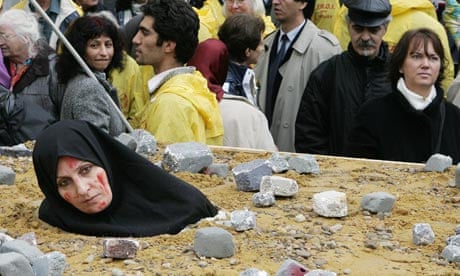
The Daily News reported in August that two young women in Syria in two separate incidents were stoned and bludgeoned to death because of alleged adultery.

In May 2014, a pregnant woman in Pakistan was stoned to death by her relatives and spurned finance as a crowd watched.  USA Today notes that the Lahore Police charged the young woman’s father with murder.  The father told police that he killed his daughter because she had shamed the family.

An Iranian woman protesting over death by stoning in Brussels

These cases are not limited to only developing countries.  Violence against women is on the rise globally.  Two women in separate incidents were attacked in the United States according to Think Progress.  “One woman in Detroit was shot and killed after refusing to give a stranger her phone number. Another woman in New York got her throat slashed for refusing to go on a date with a stranger.”

Women with disabilities are victims of violence more often than the rest of the population.  They are at higher risk for many reasons including ignorance, cultural and religious stigmas, discrimination and lack of family and social support.

According to the National Rape Response Service:

  • U.S. National studies estimate that almost 80% of people with disabilities are sexually assaulted on more than one occasion and 50% of those experienced more than 10 victimizations.
  •  Women with disabilities are raped and abused at a rate at least twice that of the general population of women.
  •  Among adults who are developmentally disabled, as many as 83% of the females and 32% of the males are victims of sexual assault.
  •  The UN believes that the best chance we have to end violence against women is to try and prevent it and address it at the structural and root causes.

The UN suggests two solutions:

  1. Education for prevention
  1. Working with men and boys

My husband and I have two grown children a son and daughter born with Down syndrome.  We taught our son to respect and honor women.  My husband also modeled good behavior so my son was lucky to have a positive role model.  Men and women must work together to find innovative ways to stop the senseless and brutal violence against women with and without disabilities.

For more information please visit:  www.RuhGlobal.com