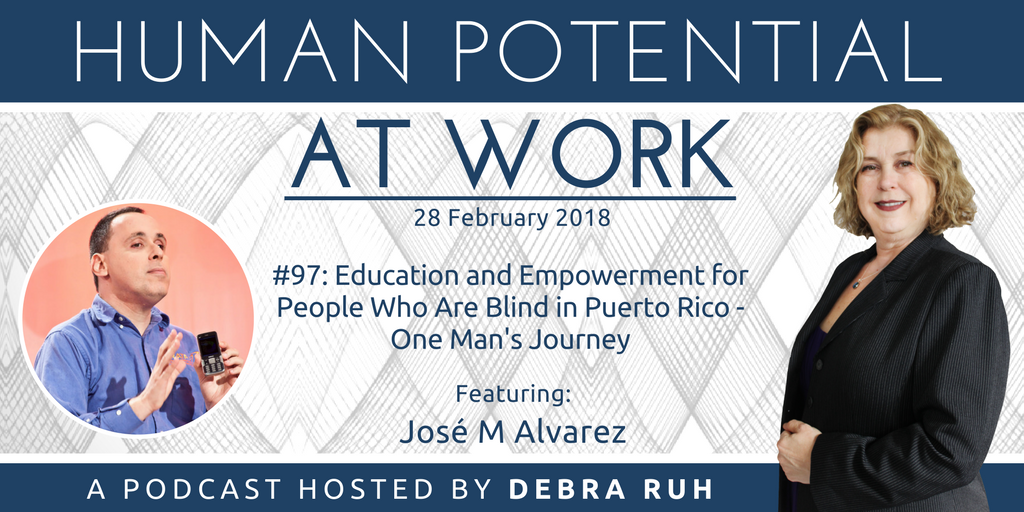
Episode Flyer for #97: Education and Empowerment for People Who Are Blind in Puerto Rico- One Man’s Journey
José M Alvarez joins the program to discuss the efforts that he is making to create programs that make technology more accessible for persons with disabilities. José also shares how he empowers his students by teaching them coding skills and how he has created software and apps that can teach skills in an accessible way. He also shares his most recent efforts which involve starting a foundation to help develop the next generation of programmers.
Episode Flyer for #96: Disability Inclusion and Accessibility in India
Nipun Malhotra joins the program from India to discuss his journey of being diagnosed with a disability called arthrogryposis, which caused the muscles in the arms and legs to be underdeveloped. Nipun shares how he decided to sit up for his rights in 2012, starting the Nipman Foundation that works in the area of health and advocacy for Persons with Disabilities.
I am one of the 74% of people with disabilities that have an invisible disability[1]. But I wasn’t even aware that I had a disability until I was filling out paperwork for a state identification card at the DMV. One of the last questions on the form read: “Do you have a disability? A disability is defined as a physical or mental impairment that substantially limits one or more major life activities.” I was dumbfounded- of course I do. The reason why I was getting my state identification card was because my epilepsy prevented me from obtaining my driver’s license. However, this was the first time I had ever considered myself as having a disability because others can’t see my epilepsy unless I have a seizure.
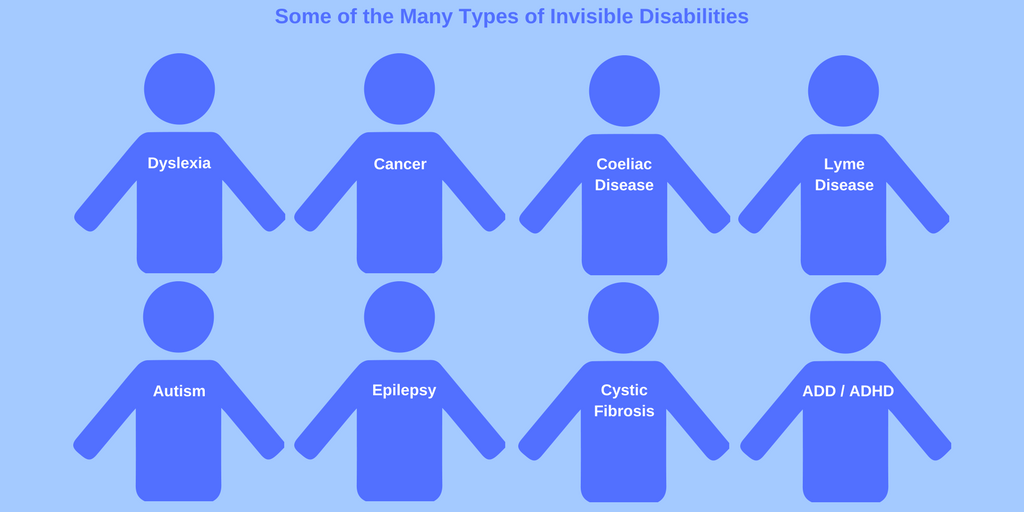
Invisible disabilities can range from an immensely diverse range of conditions such as chronic pain, chronic fatigue, epilepsy, mental health issues, etc. All of these conditions require some sort of adaptation to continue on living life as that individual sees fit- just like any other disability. However, the social barriers are very different. Although people with invisible disabilities don’t have to deal with the perpetual stigma of being incapable of doing something that they are completely capable of doing, people with invisible disabilities face the opposite stigma. People with invisible disabilities are often perceived to be dishonest about what they can and cannot do or feel uncomfortable asking for accommodation because “they look fine”. This can create hostile work environments where the person with an invisible disability is accused of lying or told to “Just suck it up.”
Some of the Many Invisible Disabilities
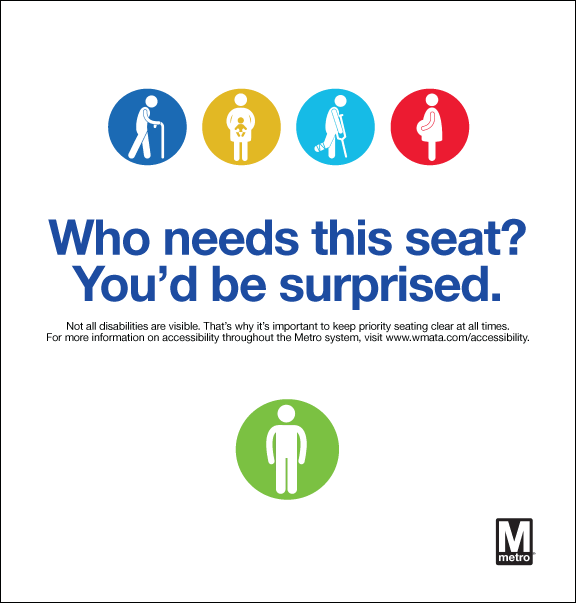
This stigma is not tethered to the workplace and is carried with them throughout the day. While trying to understand the idea of invisible disabilities, I scoured reddit for the personal, day-to-day experience of what it meant to have an invisible disability. One reddit user described having a chronic fatigue condition that caused him to faint if he stood for extended periods of time. Having just gotten off work to catch the bus, he was desperate to sit down because he felt himself on the verge of fainting. He asked a woman for a seat with a lot of reservation and shame because of the expectation that a man should stand for a woman. Despite this, he asked anyway and explained that he had a condition that required him to sit down. She replied, “You look fine to me. A young man should have some manners.” He explained that he had to beg her for the seat until she ultimately forfeited it with a large display of irritation. This anecdote was followed by an extensive thread where many other reddit users vented their frustrations about experiencing similar situations.
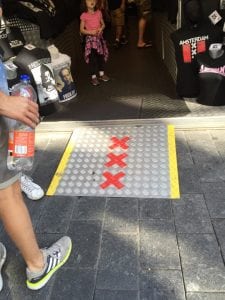
Who needs this seat? You’d be Surprised – Metro Ad That Spreads Awareness of Invisible Disabilities
I think it’s incredibly important to understand invisible disabilities because it has the potential to change someone’s understanding of the PwD community as well as society at large. Visible or not, the expectations of what people can and cannot do is a very nuanced topic for PwD, a community of about 53 million people that is growing[2]. However, this extends itself to society at large. Invisible disabilities reinforce the idea that someone’s appearance should never be used as evidence of any definitive qualities they have. Appearance should never be how you define another person- be it their use of an assistive device or their skin color or their gender presentation. Once everyone realizes that anyone could have a disability, perhaps the average stranger will be more open-minded and understanding. With increased awareness and visibility, this could very well be the case.
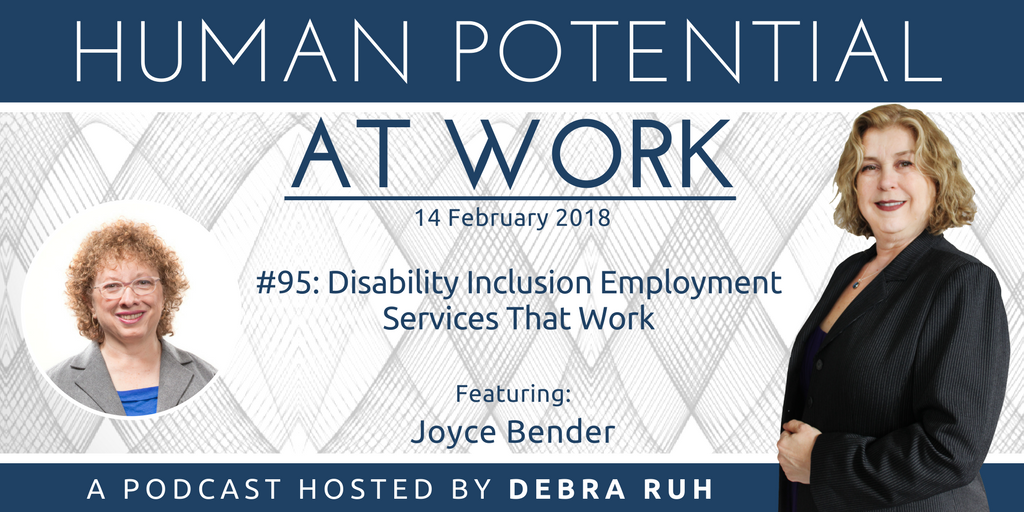
Flyer for episode 95: Disability Inclusion Employment Services That Work
Joyce Bender from Bender Consulting Services discusses the efforts that she has made in providing employers with reliable talent, as well as giving well-trained individuals with disabilities the chance to display their abilities and enhance their lives through solid careers. Joyce also shares how she is using her program “Disability Matters” to document the history of the disability community.
Written by Rosemary Musachio, Chief Accessibility Officer (CAO) at Ruh Global Communications
Ever since I was a little girl, I wanted to travel. In fact, I expressed this desire in a line from the first poem I wrote: “If I was a bird, I’d fly to every country I could find”. Although I’ve always been in a wheelchair, I didn’t think of the possible barriers I’d encounter. When I actually started traveling, however, barriers paved the way for adventure and compassion.
I quickly learned how adventurous traveling with a wheelchair was on my first trip to Germany and Austria. The adventure began at the baggage area of the Munich airport where following the baggage carousel made us dizzy. Our luggage and my chair weren’t appearing after many revolutions, making one of my friends a chicken with his head cut off. He paced around the airport asking anyone who looked like an official about my AWOL chair. Hysteria gripped him so that he wanted to return home. My girlfriend reacted completely the opposite, remaining calm and optimistic. I tried to adhere to her philosophy, though the airport wheelchair in which I sat made my body feel anything but calm and comfortable. An hour later my chair, along with our suitcases, arrived on another flight.
Yet, there was more wheelchair adventure on that trip. Let’s say I went bungie jumping without a rope while we were touring the Residence Museum in Munich. My chair wasn’t locked on a subtly slanted floor, so I rolled down four steps. This time my friend became two chickens with their heads cut off, blaming himself while trying to get help. I worried more about his distress than my chin flowing like the Red River. The ambulance ride wasn’t that bad since the blonde, blue-eyed paramedics were delicious eye candy.
Steps that have continued to be obstacles throughout my travels over the years have proven to be compassion and kindness extractors. In Austria and Germany, we encountered many steps to churches and museums. My friends dragged me in my wheelchair, or carried it and me separately, up and down those stairs. Even strangers have offered help when I toured the ancient streets of Rome or the busy cobblestone alleys of Napoli. The fact that many of these strangers were handsome Italians made me grateful momentarily for steps or high curbs.
Metal Ramps for Stores.
Many European storekeepers also have recognized steps or high entrances to their businesses as barriers. When I went to Belgium and Holland two years ago, aluminum and wooden ramps were at the entrances of many stores. Most were little shops, not major department stores. If a ramp wasn’t there, the shop owner laid one down if we wanted to enter their place. I thought I was in an accessible fairyland where every structure I encountered became barrier-free. These shopkeepers were adhering to the Act of Equal Treatment on the Grounds of Handicap or Chronic Illness, which was established in December 2003. They also were following the United Nations Convention on the Rights of Persons with Disabilities (CRPD) Treaty, which was ratified by both Belgium and the Netherlands.
When I also was in the Netherlands, I also had the most accessible bathroom ever! It was something that came out of Accessible Homes if such a magazine existed! The room could fit five wheelchairs. Not only did it have a shower chair, it had a shower where I could take a shower right in my wheelchair. If the shower chair had sturdier rests and a belt, I’d have used it more. The toilet was raised high so my friend could sit me on it without straining her back and making us both fall. Of course, it also had grab bars. The only problem was the toilet seat was hard. Twisting a towel around its rim helped.
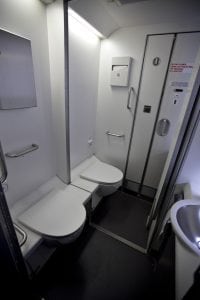
Airplane Bathroom
A hard toilet seat has been the least of my problems on airplanes. A bathroom on the airplane requires both you and the caregiver to be contortionists and involuntary exhibitionists if the flight attendants aren’t kind enough to block the interesting view from others while helping with the wheelchair. Accomplishing your goal can be quite difficult with the awkward logistics. Getting to the bathroom also can be quite a feat. Passengers’ eyes followed, some gawking and others staring admiringly as the airline attendant pushed me down the aisle in a narrow chair. I have felt like keeping my arms outstretched so I could palm everyone as athletes do when they emerge from the locker room onto the playing venue.
Not only is going to the bathroom on an airplane a challenge when you’re a wheelchair user, sitting in a plane seat also can be one. Because I have to readjust myself, especially if I slide down often, I have had to use the back of the seat in front of me or the airplane side panel for foot leverage to push myself up. If someone was sitting in front of me, using their seat as a foot stool could create Exorcist head turns. I gave apologetic expressions. Nine times out of ten, they understood. At times, they had to call the flight attendant to settle the matter, usually by moving either one of us to a different seat. Of course, since people now have the option of selecting seats when they book online, I try to select exit row seats that have no one in front.
Sure, traveling in a wheelchair can have trying moments. Yet, you need to look at those trials and tribulations as adventurous and humorous, as an opportunity for others to empathize and show compassion. That’s what makes a trip more meaningful and enjoyable.
Flyer for Episode #94: “Opioids Helped Me Work Again”- Lessons From An ADA Attorney
TEDx speaker and ADA attorney Kate Nicholson discusses her journey with chronic pain, and how opioid treatment helped her in her healing process. Kate discusses how, on the right dose of pain medicine, she drafted the current regulations under the ADA, coordinated with the White House and supervised thousands of cases by hundreds of attorneys across the country from a screen and well-camouflaged bed. Kate shares her thoughts on opioid treatment for chronic pain and the need to factor in the needs of those with chronic pain in the conversation around opioids and addiction.