Focus on Jay Ruderman

Jay Ruderman Photo by Noam Galai

“Supporting children with disabilities and becoming a role model for other philanthropists.”
By Debra Ruh

I had the pleasure to interview Jay Ruderman.  He is the President of the Ruderman Family Foundation, an impressive organization that focuses on the inclusion of people with disabilities in the United States and Israel. He also serves on the Board of Directors of the Jewish Funders Network and is a member of the American Jewish Joint Distribution Committee Executive Committee.

Jay is married and a father of four children.  He is a life-long Bostonian and after graduating from law school, he began his career as an assistant district attorney in Salem, Massachusetts. He became Deputy Director of the American Israel Public Affairs Committee (AIPAC) in New England in 2001.  He also enlisted in the Israel Defense Forces (IDF) in 2005 and became the liaison between the IDF and Diaspora Jewry.  After his service in the IDF, he became the Leadership Director for AIPAC in Israel.

Let’s begin the interview:

Debra Ruh (Debra) question:  Jay you are on a mission to change the way the United States and Israel view individuals with disabilities in society.  Tell us more about your mission.

Jay Ruderman (Jay) answer:  Individuals with disabilities are one of the last communities to have their rights systematically violated by the government.   Wikipedia defines social justice as, “the ability people have to realize their potential in the society where they live.”  This definition can be broken down into three parts: realizing potential, in society, and where they live.  For Jewish people with disabilities, each of these parts presents a challenge – and for the rest of us, they present an opportunity.

The full inclusion of people with disabilities in society is a matter of social justice, civil rights, and fairness. Every Jew counts, every Jew has something unique to offer our community, and every Jew is created in the image of God, no matter how they look or express themselves.  Approximately 1,000,000 Jews in the United States have some form of disability.  Look at that number again: 1,000,000 people, in the Jewish community alone. Our job must be to invite them in, not put up barriers to keep them out.

Can a person with a disability realize his or her potential?  The unemployment and underemployment rate for people with disabilities of working age is close to 80%.  Gainful employment can build a person’s self-esteem, enable him or her to get out of the house and be social, and change preexisting prejudices about his or her abilities.  Additionally, gainful employment allows individuals with disabilities to become contributing members of the workforce, which benefits the overall economy.  Keeping people with disabilities out of work leaves them at home, with little chance to realize their potential.

Are we, as a society, inclusive?  Many of our schools are not.  Many parents are forced to forgo a Jewish education because schools lack the resources or are unwilling to “accommodate” a child with disabilities. These children should not be accommodated.

They should be welcomed with open arms, like every other child! When considering moving to a new city, all parents have to consider educational options. Parents of children with disabilities have added concerns:  If the community is not inclusive, then the community is not meeting the needs of all citizens.

Debra Ruh (Debra) question:  Please explain more to our readers about your work in Israel and in the United States to include children with disabilities in society.

Jay Ruderman (Jay) answer:  Let me give some background about our foundation. The Ruderman Family Foundation is an American-Israeli foundation which focuses on recognizing and rewarding innovative programs which provide services that foster full inclusion of people with disabilities in their local Jewish community. It exemplifies the best in Jewish values. Guided by our Jewish values, we support effective programs, innovative partnerships and a dynamic approach to philanthropy in our core areas of interest: advocating for and advancing the inclusion of people with disabilities throughout the Jewish community and modeling the practice of strategic philanthropy worldwide.

Our first major foray into philanthropy was a large initiative to improve the Jewish day school system.  We partnered with another family and we determined that children with disabilities were not able to access the Jewish educational system.  We made a big commitment to this effort and have been involved in this project for over 10 years.

After becoming the president of the Ruderman Family Foundation my goal was to continue the excellent work of the foundation.  I also wanted to raise the inclusion of persons with disabilities to other foundations and philanthropists.

 Debra question:  Let’s talk more about your work in Israel.  

Jay answer: The foundation got involved in a major initiative with the Israeli government and an organization called the American Jewish Joint Distribution Committee to make Israeli society more inclusive of people with disabilities.  This was the first time a private family foundation partnered with the Israeli government.

The project is a series of pilot projects that allows the Israeli government to be a more proactive with inclusion of persons with disabilities.  The programs are supporting the Israeli government to move away from housing people with disabilities in institutions and instead create programs that allow persons with disabilities to live independently in their communities.  Centers for independent living programs are now located throughout Israel.

We felt strongly about supporting the established centers for independent living throughout Israel.  The programs help individuals with disabilities obtain or improve job skills.  We also have programs that are teaching them independence, self-defense strategies and how to react to violence.  The programs provide families that have young children with disabilities support networks of a myriad of issues focused on inclusion and unity.

After these programs were successful, we began to invest in other societal programs to help people with disabilities.  For example we support a project in Israel that helps persons with intellectual disabilities get married.  We partner with major organizations to help educate and bring awareness to issues that are impacting the full inclusion of individuals with disabilities.  By advocating for a more progressive model inclusion and funding innovative programs.

We are very active online and are heavily engaged with media in both the U.S. and Israel.  We believe it is critical to take a leadership role and publicly advocate for individuals with disabilities.

Debra question: How about your efforts in the United States?  Why don’t you tell us more.

Jay answer:  We are heavily engaged in the Boston area.  We realized that there is a major gap in the United States between education and entering the workforce.  Persons with disabilities are provided educational options until they are 21 years old.  We saw major transition from education to employment issues.  Unemployment for persons with severe disabilities is over 70%.   We decided to become part of the solution so we created an employment program in Boston called “Transitions to Work”.

The individuals with disabilities are trained at specific job sites.  For example, we have a program in a Boston area hospital.  After the student completes our program they secure positions with that hospital or with other hospitals in the area.

Our program teaches skill sets that are valuable to these employers.  Our program also is unique because we work with employers to determine the skill sets and the employers sign-off on the program to be sure it meets their training needs.   We started having more successful employment outcomes when we facilitated these conversations at the CEO level.  Once that happened we started to see a change in attitude and employers started to become major advocates for employment with people with disabilities.

One employer has hired many of our graduates.  The lead manager started talking to colleagues about the program and they found many positive by-products.  The manager noted that the company hired these employees not only because it is the right thing to do it but because it was good for their businesses bottom-line.  These efforts have changed their workforce.  Employee morale has been boosted all over the company.  Their employees feel good about working there because it’s not just about the bottom line but about becoming a socially conscious business.  They have become an employer of choice and they are able to recruit and retain better talent across the board.

Debra question: Tell our audience about the foundation and your efforts to support disability inclusion.

Jay answer:  We take a different approach from many other foundations.  For example, we do not accept unsolicited applications for support.  The Foundation’s methodology is very interactive with our grantees.  We issue an invitation to an applicant to apply after we have conducted a thorough analysis of the potential partner.  We check to be sure there is a shared vision, innovation, organizational strength and a willingness to collaborate.

We collaborate with other major funders to partner and promote the sharing of knowledge on or about successes in its mission.   Also our staff is heavily involved in the development of the programs.  They remain very involved in major programs funded over multiple years.  We carefully monitor the programs to assess future funding potential.

As part of our commitment to inclusion and enhancing the lives of adults and children with disabilities, we are actively supporting a range of innovative projects with organizations that focus on integration into society and minimizing feelings of loneliness. These projects cover education, housing, employment, synagogues, community life and much more.

To learn about the many organizations in the United States and Israel, past and current, who have received grants from the foundation, please click below:

Major partnerships:
http://www.rudermanfoundation.org/programs/inclusion/major-partnerships

Grantees in the United States:
http://www.rudermanfoundation.org/programs/inclusion/u-s-grantees

Grantees in Israel:
http://www.rudermanfoundation.org/programs/inclusion/israel-grantees

To learn more about The Ruderman Foundation please visit: www.rudermanfoundation.org

To learn more about Jay Ruderman please visit: http://www.rudermanfoundation.org/about-us/staff/jay-ruderman

Draw Disability by Kevin Ruh

#DrawDisability Rainbow
#DrawDisability

Speaking with my sister about disability seems like a natural conversation. The only thing is that my sister Sara does not see disability the same way as me. Sara has a harder time putting her finger on exactly what the term even means. Her reaction made me think of why it seemed to be such a clear cut thing in my mind. I began to question if it even was as simple as I had been making it. Sara had opened my eyes to the possibility that disability is like a shapeshifting animal that is difficult to define. Sara brought up our friend Dave. He has recently been diagnosed with Schizophrenia. Sara brought this up because he has been a friend of ours and after struggling for a while has finally found out a diagnosis so he can begin to cope with what is going on.

sara-kevin-300x239.jpg
Sara and Kevin Ruh

Sara processes things slowly and takes her time to consider all of the aspects of change. Having known Dave since we were both children, this is a change in Sara’s mind, Of course for him as well. Sara was born with Down syndrome, she is very high functioning compared to some others with Down’s. Thinking of someone gaining a disability is a strange concept for us all, but Sara has had to deal with the topic of disability her entire life. Sara hears many of her loved ones talking about disability on an almost daily basis.


 Sara Ruh's illustration for #DrawDisability
Sara Ruh’s illustration for #DrawDisability

Our mother, Debra Ruh, and I both work in the disability advocacy realm and it is a constant topic of discussion for both work and personal life. Recently GLOBI has began to ask for submissions to their global #DrawDisability campaign. When we told Sara about the initiative she was excited and wanted to contribute artwork for them. They are asking people all around the world of all ages to draw what disability means to them. Sara’s first choice to draw on the topic was the idea to create a portrait of Dave. What does disability mean to any of us?


To learn more about Globi and guidelines for #DrawDisability, please visit
www.globi-observatory.org/drawdisability

To learn more about Ruh Global Communications, please visit
www.RuhGlobal.com

Programmatic Advertising.org interview with Debra Ruh

Debra Ruh - CEO of Ruh Global Communications
Debra Ruh – CEO of Ruh Global Communications

Debra Ruh is a digital marketing professional who enables people with disabilities’ voices to be heard and included in marketing and communications outreach. As the founder of Ruh Global Communications, a strategic communications and digital marketing firm, she strongly believes that social media empowers a diverse array of perspectives to be shared, and is optimistic about the future of digital.

Her business intrigued us, and we just had to hear her perspectives on digital marketing at large. We’re grateful that she took time out of her busy day to share some of her insights with us:

Programmatic Advertising.org: In your opinion, how is programmatic advertising – the growing prevalence of marketing automation, data mining and the cloud – changing the world?

Debra Ruh: I think tools like programmatic advertising can teach us to more effectively market to clients and audiences.  It will not replace people because the win is mixing both worlds – technology and humanity.  I believe it can help us explore channels and directions that we have not considered in the past.

Programmatic Advertising.org: What systems and ways of thinking do you think are being completely disrupted by the emergence of programmatic buying? By digital advertising in general?

Debra Ruh: I think marketing as a whole is being disrupted. It will be interesting to watch programmatic unfold because the brave souls that tap into the powers of these tools will have great successes.  We can tap into the emotional and technological opportunities that marketing now holds for the world.

Programmatic Advertising.org: We’ve often heard it said that ‘man is only limited by his imagination’ – what might be the biggest growth areas for advertising?

Debra Ruh: Blending everything together – science, technology, traditional marketing, new media, programmatic – tying it all together to really change the world.  For example, the bionic eyeearand exoskeleton represent science and technology coming together to solve problems that people have had forever.  Now tie marketing into those discoveries and you wake people up to so many possibilities.  We are in exciting times.

Programmatic Advertising.org: In your opinion, what are some significant trends emblematic of today’s advertising philosophy? Do they align with your own opinion of what’s the most effective?

Debra Ruh: I think that many advertisers are missing many opportunities. People with disabilities and minorities are typically overlooked. People want to be part of the conversation – they want to be inspired and feel like they are part of the answers.  Many advertisers forget who their true audience is or could be, and focus only on small, wealthy segments. I think we will have a lot of work to do, paradigms to shift and voices to hear.

Programmatic Advertising.org: Can you discuss how digital marketing is changing to include people with disabilities? During a conversation with another marketer, we learned that just because a population is small, it doesn’t mean it is not influential.

Debra Ruh: Sometimes the most influential are those that aren’t that “influential” in a standard sense. Here is an example that is near and dear to my heart:

Richard Dawkins is a very famous atheist, scientist, BBC Talking Head and professor at Oxford University who likes to pick fights with people – women, Muslims and Christians. On Twitter, he stated, “If your fetus has Down syndrome, abort it and try again.”

Needless to say, that captured my attention.

I sent him a picture of my beautiful daughter with Down syndrome and told him that she’ll never be a famous scientist, but she does add value to the world.  It was retweeted by thousands of people and was picked as the Tweet of the Week by BBC. My number of followers (60,000) wasn’t much compared to his 1 million, but we attracted so much media attention. I acquired 3,000 new followers in 48 hours and many of those followers are some of my most vocal supporters.

Who is considered to be influential has obviously changed. Our opinions were influential to other people. Stupid, smart, good, bad – all people can be influential.

However, not much is being done to include people with disabilities or people with acquired disabilities. All marketers need to re-think their marketing to appreciate their value.

One thing we have to do as a society is move away from talking about people with disabilities as charity cases and instead use an empowerment model. They are not a tragedy, disability is just a part of life.

At the end of the day people with disabilities are consumers – and the numbers are staggering – they are 1 in 7 of all people on this planet. I’m a consumer, my daughter is a consumer and my son is a consumer. If we know that you are actually trying to make sure my daughter is included in your service, products or marketing, you just got our attention – I become an advocate for your brand. You have all of these multipliers that come into effect.

Programmatic Advertising.org: Can you tell us about any campaigns over the past year that have caught your attention (in a good or bad way)? Why did they stand out to you?

Debra Ruh: Since much of my work focuses on Disability Inclusion, Social Good, Human Rights and Accessible Technology the campaigns that caught my attention were the ones that included persons with disabilities in meaningful way.  My favorite is probably the Microsoft 2014 Super Bowl commercial. I also loved these others by Nordstrom and Guinness about power of the human spirit.

Programmatic Advertising.org: What excites you about the future? What are you looking forward to?

Debra Ruh: Everything coming together for the good of all.  Not just for the rich, the powerful, for one country or another – but the good of mankind.  I know that sounds trite but I believe that marketing could help us all evolve as human beings.  I am hopeful about the future.  I also love that the “new” social media rules allow many more voices to be heard, not just the select few.

Programmatic Advertising.org: What precisely are these “new” rules of social media marketing?

Debra Ruh:  Honestly, the “new rules” are that the “rules” keep getting re-written very quickly! For example, celebrities and corporations weren’t following their audiences, as if it was an unwritten rule that if you’re Kim Kardashian or HP, you’re so famous, you don’t need to follow your supporters. These rules have changed, as the voices that seem to be the most credible are people that are actually connecting with their followers.

After all, social media is a conversation. If I am listening to and engaging your voice, you should care about mine, too.

Can our greatest teachers be persons born with disabilities?

Debra & Sara Ruh
Debra & Sara Ruh

So many people are sad and have lost their ability to find the simple joys in life.  My Mom is one of those people and as she has aged she has become more and more negative and sad.  She has always been the half-empty type person but when we lost my Dad last year her filters went with him.  She struggles seeing the world as a good place and often gets lots in the darkness.

I try to gently remind her of all the joys and wonders all around her.  Instead she tells me that I am in denial about the sad state of the world.  She also thinks that I should lose the Rose Colored Glasses.  I love her and will always be there for her but her view of the world makes me sad.  I see the world as such an amazing place and as I get older want to continue to contribute to the world.

I have been blessed by a happy marriage for over 32 years and we have two grown children – Sara and Kevin.  Our oldest daughter Sara was born with Down syndrome and we named her after my mother.  Everywhere we looked we were told the dark, negative stories associated with raising a child with disabilities.  We decided the experts were wrong and proceeded to prove them wrong.

Our beautiful, loving, joyful and simply amazing daughter has been a great teacher to us.  She lives the great spiritual truths: “stay in the moment”, “see the good in everyone”, and “Life is about Love”.  I also practice these truths but it is truly a walk in faith sometimes.  If our intelligence was measured on how a person lives the greatest spiritual truths – Sara would be a great sage.

Sara and Kevin
Sara and Kevin

Sara’s brother Kevin has also been positively impacted by his sister.  Read his blog “Lessons Learned From my Sister” http://ow.ly/COnrj

Sara has inspired my work and I have spent the last twenty years in the disability field working hard to empower persons with disabilities (PwD).  I have worked with countries all over the world to create programs and policies to include PwD in every aspect of society with an emphasis on the workforce.  I have had the pleasure to work with huge corporations (national and multi-national) to help them understand how to include this segment of the population in their workforce and marketing efforts.  According to the World Health Organization (WHO) 1 in 7 people are impacted with a disability.  In the United States 1 in 3 families are impacted.  Source: NOD

Disability is part of life and we all will experience disabiity in our life times.  As we age more of us are acquiring disabilities.  I have worked hard to shine a different light on disabilities.  Instead of seeing it as a tragedy – we should realize it is part of life.  Obstacles allow us to find our greatest strengths and treasures in life?

My Mom has been a great teacher to me and she has been trying her entire life to manage her mental illness.  Life is tough for her and I try to be authentic with her and love her regardless of her negative view of the world.  I have heard experts say to stay away from negative people but at this time in my Mom’s life she needs me.  So I try to be authentic with her and try not to make her walk more difficult.

I view her negative lens of the world as an inspiration for me to always be grateful and see beauty in all things.  Maybe it is a defense mechanism but I have become a better person because of my Mom.

I also believe we can learn a lot from people like our daughter Sara Ruh.  She inately seems to understand the value of staying in the moment.  Eating when she is hungry, sleeping when she is tired (no matter where she is – smile), and staying 100% in the moment and fully authentic.  She is an amazing soul and I am so blessed to be part of her life.  Both the Sara’s in my world – my Mom and my Daughter have been great teachers and gifts to me.

To learn more about our work, please visit: www.RuhGlobal.com

Is global violence against women with and without disabilities on the rise?

Debra Ruh - CEO of Ruh Global Communications
Debra Ruh – CEO of Ruh Global Communications

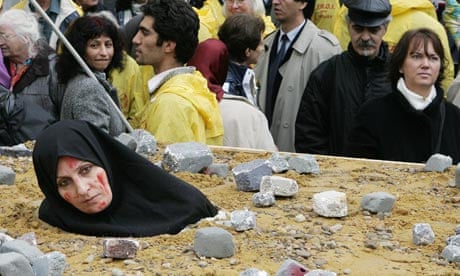
According to the UN, violence against women has become a global epidemic.  There are many factors associated with the violence including cultural, religious, political and economic conditions.  According to the UN and WHO 1 in 3 women in the world have been beaten or raped.

The Daily News reported in August that two young women in Syria in two separate incidents were stoned and bludgeoned to death because of alleged adultery.

In May 2014, a pregnant woman in Pakistan was stoned to death by her relatives and spurned finance as a crowd watched.  USA Today notes that the Lahore Police charged the young woman’s father with murder.  The father told police that he killed his daughter because she had shamed the family.

An Iranian woman protesting over death by stoning in Brussels

These cases are not limited to only developing countries.  Violence against women is on the rise globally.  Two women in separate incidents were attacked in the United States according to Think Progress.  “One woman in Detroit was shot and killed after refusing to give a stranger her phone number. Another woman in New York got her throat slashed for refusing to go on a date with a stranger.”

Women with disabilities are victims of violence more often than the rest of the population.  They are at higher risk for many reasons including ignorance, cultural and religious stigmas, discrimination and lack of family and social support.

According to the National Rape Response Service:

  • U.S. National studies estimate that almost 80% of people with disabilities are sexually assaulted on more than one occasion and 50% of those experienced more than 10 victimizations.
  •  Women with disabilities are raped and abused at a rate at least twice that of the general population of women.
  •  Among adults who are developmentally disabled, as many as 83% of the females and 32% of the males are victims of sexual assault.
  •  The UN believes that the best chance we have to end violence against women is to try and prevent it and address it at the structural and root causes.

The UN suggests two solutions:

  1. Education for prevention
  1. Working with men and boys

My husband and I have two grown children a son and daughter born with Down syndrome.  We taught our son to respect and honor women.  My husband also modeled good behavior so my son was lucky to have a positive role model.  Men and women must work together to find innovative ways to stop the senseless and brutal violence against women with and without disabilities.

For more information please visit:  www.RuhGlobal.com

Down syndrome and Alzheimer’s – Can a vegan diet help? by Kevin Ruh

Kevin Ruh - Chief Marketing Officer at Ruh Global Communications
Kevin Ruh – Chief Marketing Officer at Ruh Global Communications

Alzheimer’s disease is one of the scariest ailments facing mankind today.  The idea of not being in total control of your mind is a prospect most cannot fathom.  Many will be negatively and personally impacted in our lifetimes by this scary disease.  With the large generation of the baby boomers (76 million Americans) beginning to come of age, this threat becomes more and more frightening.  To add to the problems recent studies show that people with Down syndrome have a much higher rate of developing Alzheimer’s and as early as their forties.

According to a recent article: Increasingly, Adults with Down Syndrome Face Alzheimer’s  “Adults with Down syndrome are at high risk for developing Alzheimer’s disease, and at an earlier age than the population as a whole. At least 25 percent of those older than 40 have Alzheimer’s, and more than 50 percent of those over 60 do, compared with 6 percent of those over 60 in the overall population.” Source: National Task Group on Intellectual Disabilities and Dementia Practices

My older sister, Sara, was born with Down syndrome makes these statistics even more troubling.

I have been a vegan for over ten years and Debra, my mother has been an on again off again vegan and vegetarian for years.  Our family exercises and tries to eat healthy diets.  Like many other Americans our family tree includes diseases like cancer, heart disease, high blood pressure, strokes and diabetes.

We all realized that Sara’s best change might come from a dramatic change in Sara’s diet.

Debra was worried even before her own mother had an accident and was diagnosed with dementia.  We began looking into the topic and trying to see what could help those we loved.  We read several studies that show diet plays a very big part in disease prevention.

When my mother saw the studies about Down syndrome and Alzheimer’s she remembered the work that Dr. Neal Barnard has done on Vegan diets and Alzheimer Disease. Barnard has been researched how a vegan diet can reduce your risks for many diseases including cancer, diabetes, heart disease, strokes and Alzheimer.

Barnard writes a blog on The Physicians Committee on Responsible Medicine website. In his blog: Eating to Prevent Alzheimer’s disease he notes that a vegan diet can reduce the risks associated with these diseases.  One reference: “The Ninth Annual Conference on Alzheimer’s Disease and Related Disorders, Harvard researchers discussed the role that fruits and vegetables may play in AD. Jae Hee Kang, Sc.D., and colleagues evaluated approximately 13,000 participants in the Nurse’s Health Study.   They calculated the women’s intake of fruits and vegetables between 1984 and 1995 and correlated these values with performance on tests of cognitive function conducted between 1995 and 2003, when the women were in their 70s. Women with the highest consumption of green leafy vegetables and cruciferous vegetables—both high in folate and antioxidants such as carotenoids and vitamin C—declined less than women who ate little of these vegetables.”

So the rest of my family including Emily Ha of Ruh Global Communications have committed to Dr. Barnard’s recommended 21 Day Kickstarter Vegan Diet.  On 10/3/2014 they began a diet that is free of animal products for twenty-one days.

Dr. Neal Barnard
Dr. Neal Barnard

With some help from a health and exercise coach, Jo Beardsley at American Family Fitness we are all going to help Sara to lose weight healthily with the goal to significantly lower her risk of developing Alzheimer’s.

Sara eats a healthy diet now, but with this pledge, we stack the odds in her favor by eating her healthiest diet available.  The rest of our family is also committing to eating the same way.  We all want to see an end to these horrible diseases.

Emily will be keeping a blog tracking the journey that provides recipes for Debra and Sara to check daily with ideas for meals and other information.

The blog is at Rawesomeveganrecipes.tumblr.com and will include many raw vegan recipes too.  Join us as we focus on Sara’s journey. We also welcome your stories and recipes.

Social Media Response by Kevin Ruh

Kevin Ruh - Chief Marketing Officer at Ruh Global Communications
Kevin Ruh – Chief Marketing Officer at Ruh Global Communications

I am an advocate of using social media to bring awareness about the community of people with disabilities (PwD) and accessible Internet, Communications and Technology (ICT). I believe that the community of PwD is starting to find their voices via social media. However, there are some significant accessibility problems with social media. There are leaps in accessibility that have been made and are in progress. Yet we find that many social media tools and applications are not blending accessibility into their products and when they are, it does not seem to be a priority. PwD are often left out of the social media conversation and movement because the devices are less accessible.

We find that many social media tools and applications are not blending accessibility into their products. PwD are often left out of the social media conversation because they apps are inaccessible. This is difficult to deal with due to the fact that most don’t seem to have accessibility in mind until there is a problem, instead the devices and applications need to be thought of as opportunities for universal access.
Social media has to be accessible or we continue to widen the Digital Divide, it is as simple as that. As long as there are access problems we run the risk of alienating a portion of our community.
The Internet has opened up many opportunities as well as greatly improving the quality of life for these users, but there are still barriers. Many people think of disabilities in extreme terms such as blindness and deafness, but it also includes many others with visual or hearing impairments that are increasingly common in our aging population, and other challenges such motor and cognitive impairment. The spectrum of ability for all users is variable.

Can an organization really afford to lose this audience?

I think not, and this community is chattering on more accessible platforms, about the good and the bad. If social media tools are not accessible those platforms stand to lose out on major benefits, or risk being singled out as not worried about the less able part of the population and their advocates.

Sometimes we hear that it is too hard to make an application or platform accessible. This makes sense only if the organization wishes to put forth the message that their customers are not worth a re-tool of an app. Accessibility should be built into the system similarly to building in privacy, security or usability. The second thought of accessibility as “not an easy add on” and will be noticed by those left out.
The good news is that Social Media applications can be made fully accessible allowing everyone to use them; all aspects of use just need to be considered.

In years past, developers were afraid that making the application accessible would make a system less creative or innovative or other security issues. The good news is we have seen amazing strides with accessible social media and now it is innovative developers take pride in blending accessibility into the process level. This seems to be the future of technology and it should be our end goal to reach universal access.

Is participation for all out of the question? If we don’t make social media accessible than we continue to widen the “Digital Divide” and according to the World Health Organization (WHO) one in seven people are impacted with disabilities worldwide. Plus 1 out of 3 households in the U.S. are impacted by disabilities, there for this is an issue that affects family and community. Worldwide, this group numbers 500-750 million people and is a key influencer of the public’s perceptions.

There is no excuse to not make your Social Media applications fully accessible so that everyone can use them. In years past, developers were afraid that making the application accessible would make a system less usable or “dumbing” the system down. Once again, ridiculous – we have seen amazing strides with accessible social media and now it is BAD design if you do not blend accessibility into the process level.

Apple iPhone 6, innovative as long as it is accessible By Kevin Ruh

Kevin Ruh - Chief Marketing Officer at Ruh Global Communications
Kevin Ruh – Chief Marketing Officer at Ruh Global Communications

Finding new aspects to accessibility within the new devices that are forthcoming is exciting and sometimes troubling if accessibility has not been consider. With the recent release of the Apple iPhone 6 questions loom about the added features that make this new device unique and innovative can also cause accessibility concerns.
The screen is slightly larger for the new edition of the iPhone. A larger screen is good for users with a visual impairment as it is simply easier to see. A person with fine motor impairment can make navigating a tiny touch screen accurately very difficult. In that case a larger screen can be an upside to the user. Users that manage the small motions fine may find the larger strokes create a challenge and find it cumbersome. Limited motion due to size has caused some users to criticize the iPad.
The battery life has been improved on the iPhone 6. This is usually seen as a positive to all users. Especially when the user uses their device as communication device or as assistive technology. Longevity is also a huge benefit to everyone but is especially helpful to consumers with disabilities and anyone that needs the device to be accessible.

iPhone 6.0 1
iOS 8 has strived to be an accessible operating system and has accessibility features that previous iOS’s versions inspired. The new iPhone 6 will run iOS 8 when it is released which many hope will include access features that have not yet been announced.
The new OS also promises to run the new Apple Pay, which is a new type of program that is striving to replace credit cards entirely. The accessibility implications of this are numerous. The idea is to use your iPhone to securely transfer money is one that is astounding and would allow many of us easier access to monetary transactions. When the iWatch is released it may too have many accessibility accomplishments that we have yet to imagine. These devices show that accessibility can be a great way to widen the use of mobile technology for all.

Apple has been a leader in accessibility and their innovation has change lives. I hope they continue to blend accessibility into every device, app and service that is offered.

Introducing Dr. Christopher M. Lee in “Leaders Making a Difference in the World” : A Story of Dyslexia, Learning Disabilities and Finding his Greatness

Debra Ruh - CEO of Ruh Global Communications
Debra Ruh – CEO of Ruh Global Communications

I believe that the best way to further inclusion of persons with disabilities is to tell the stories of the organizations and leaders that are making a difference.  Progress is being made all over the world and I want to highlight efforts coming out of Atlanta, Georgia.  I have had the pleasure to collaborate with Dr. Christopher Lee and his team at AMAC Accessibility Solutions and Research Center (AMAC).  AMAC is part of the Georgia Institute of Technology located in the College of Architecture.

Dr. Christopher Lee has been an advocate and pioneer in promoting social entrepreneurship to benefit humankind and further strive for sustainable social change in the field of disabilities.

Why does Dr. Lee care about the community of persons with disabilities?  He is part of the community and was diagnosed with a cognitive deficit disorder in the second grade.  He was placed in special education and speech classes.

Dr. Lee describes his dyslexia in this way: “Nothing I hear seems to stick with me and nothing I say seems to come out right.  It is as though I am in a world where the air is packed with floating symbols.  I watch as everyone swallows the symbols, digesting them to produce something that everyone else understands, but I can only swallow bits and pieces.  Choking, I remain hungry in my struggle to find a way to communicate and comprehend effectively.”

He recalls being a student and standing in front of the classroom, he did his best to recall the ways to spell, to read and to say the right words and phrases.  He understood that he needed to recall and use the words and phrases in the correct order to be able to connect and communicate with his peers and teachers.

He spent hours organizing his thoughts and preparing for presentations in front of his classmates.  He tried to find ways to help him get his thoughts across to his peers and teachers.  The efforts left him feeling very alone and frustrated, and in his mind and heart he longed to decipher the code of language.

Most people say that it is the intellect which makes a great scientist. They are wrong: it is character.Albert Einstein

Dr. Lee has built a lot of character and drive to make the world a better place for individuals with learning disabilities and other disabilities.  He admits to being a perfectionist and he worked very hard to fit in and succeed in a world that is not set up for his “twisted perception of language.”

He was determined to go to college and scored low scores on his SAT due to his severe visual and audio process disorders.  He had to work his way through developmental studies before he was mainstreamed at the University of Georgia (UGA).

“With everything that has happened to you, you can either feel sorry for yourself or treat what has happened as a gift. Everything is either an opportunity to grow or an obstacle to keep you from growing. You get to choose.” Wayne W. Dyer

He notes that his story is not unique from the high percentage of people in the United States and all over the world who are also dealing with learning disabilities.  This story is experienced by parents and teachers globally.  Many “experts” expected him to fail, but he worked hard and decided to become a success story and a beacon of hope for others with learning disabilities.

His motivation to become a collegiate swimmer athlete at UGA drove him hard to create his own academic action plan which included strategies, tools like assistive technology, and most importantly, a strong tutoring and mentoring network.

He also developed a communication strategy that included the use of role-playing activities where he perfected how to disclose his learning disabilities.  He became an expert in and promoting his strengths and managing his weaknesses.

Today he holds multiple college degrees including a Bachelor of Arts and Sciences in Speech Communication from University of Georgia.  He also earned a Ph.D. in Interdisciplinary Studies with a focus on Social Psychology from Union Institute and University.

His work has centered on the innovation of new models and techniques to support accessible electronic information in corporate, governmental and nonprofit entities. Dr. Lee is an internationally recognized advocate, author, speaker, principal investigator and leader in the fields of learning disabilities and assistive technology.

In1992, at age twenty-three Christopher wrote his first book, Faking It: A Look into the Mind of a Creative Learning.  This book can be purchased on Amazon by following this link:  http://ow.ly/Avs8V

In 2003, he was highlighted in Microsoft “Accessible Technology for Everyone”, a Microsoft video and publication.  http://www.microsoft.com/enable/

In 2007, he was featured in the PBS series “A Chance to Read”, hosted by Molly Ringwald, which highlights new strategies driven by emerging research that shows what’s happening across the country to help children with disabilities find success.    https://www.youtube.com/watch?v=Us8-tG6R024

Today Dr. Christopher Lee is the Founder, Director and Department Head of the AMAC Accessibility Solutions and Research Center (AMAC), located in the College of Architecture of the Georgia Institute of Technology in Atlanta.  AMAC is committed to promoting technological innovation and developing effective user-centered products and services for individuals with disabilities.

AMAC’s mission is to address unmet accessibility needs in government, non-profits, and corporations by providing products that benefit those with physical or cognitive impairments.  AMAC has pioneered a cost-effective, replicable, scalable, full service center for alternative, digital and captioned media for college students with disabilities, along with the downloadable assistive technology software.  AMAC receives baseline operational funds from the University System of Georgia (USG).

AMAC services and costs vary depending on the annual membership status of its 2,287 participating institutions. AMAC offers a variety of services to meet the individual needs of students with print-related disabilities and post-secondary institutions.

Christopher has been recognized for his advocacy and leadership many times and most recently was awarded a “Campus Technology Innovators Award for 2014”.  AMAC was also awarded a coveted “Zero Project Award 2013” from The World Future Council and the European Foundation Centre.

To learn more about Dr. Christopher Lee’s work, please visit AMAC at http://www.amacusg.org/

To learn more about Ruh Global Communications, please visit www.RuhGlobal.com

Mobile tech & access By Kevin Ruh

Kevin and his sister, Sara Ruh who has Down Syndrome

Building accessible mobile technology is becoming more and more a topic of discussion and with good reason. The world is affected by disability; if you do not have any form of a disability then it is likely you know someone who does, so this is a topic that comes very close to home for many of us. As the number of people connecting through the internet grows and people begin to share more and more it become easier to see that even if you don’t have anyone in your life affected by disability, you need only look a short distance to find thousands of stories about how much people care about one another and how awareness can spread, this is the beauty of the internet, and to take this power and harness it for good is forward thinking.

Apple is undoubtedly the leader in accessibility on mobile platforms. Many visually impaired users say that Apple is unmatched at the moment in this regard. One only needs to look at Siri or the iPhone’s voice control options to begin to comprehend the steps taken and with more of Apple’s third party Apps striving to bring themselves up to the bar of Apple’s accessibility standards. Just being in the App store is driving developers to consider wider access.

This is a great accomplishment to say the least. If this is the future of development across multi platforms, as we have seen with things like the accessibility features of the Microsoft Surface, which have given a boost and Microsoft is collaborating with others to unlock the full potential of that device. We need make sure there is not a demographic left out, but where we always have the mindset in development that accessibility is integral, it is the lifeblood of our industry and of the future.

The internet is still inaccessible to a large portion of the world just due to the troubles of lines not reaching far enough. These wires that are necessary to connect until we can active the global wireless network. With such a thing in the future shouldn’t access for all be one of the top concerns of this innovation?

The recent discussions that have been going on across the internet on the #A11Y is interesting because with a hashtag comes internet awareness. If you agree with the A11Y hashtag or not, it looks as though it has been embraced and is becoming part of the internet culture. With awareness and discussions abounding I believe right now is a very important moment in our history, and that it will be seen as a turning point towards access for all. Perhaps not today or this year, but soon, and with the strides that are continuing to be taken it’s not too far around the river bend.