“Tapping Into Hidden Human Capital,” A newly released book by Debra Ruh, Demonstrates How Leading Global Companies Improve Their Bottom Line By Employing PwD’s

“TAPPING INTO HIDDEN HUMAN CAPITAL,” A NEWLY RELEASED BOOK BY DEBRA RUH, DEMONSTRATES HOW LEADING GLOBAL COMPANIES IMPROVE THEIR BOTTOM LINE BY EMPLOYING PERSONS WITH DISABILITIES

Atlanta, GA. 07/18/2016

G3ict, the Global Initiative for Inclusive Information and Communication Technologies announced today the publication of a new book authored by Debra Ruh, G3ict’s EmployAbility Program Chair.

Hidden Human Potential coverIn this book, Tapping into Hidden Human Capital: How Leading Global Companies Improve their Bottom Line by Employing Persons with Disabilities,” Debra Ruh presents a new, game-changing perspective about the employment of persons with disabilities. By documenting existing practices of some of the largest companies in the world, the author shows that employees with disabilities are proactively recruited for their positive contributions to the competitiveness and financial performance of major businesses.

While Debra Ruh documents case studies that are eye-opening, her detailed analysis of the success factors in recruiting, hiring, and managing persons with disabilities are a must-read for any Human Resources professional and top executive of large organizations operating in highly competitive employment markets, such as those in the field of technology.

Debra Ruh’s book guides global corporations, as well as beginning entrepreneurs on how to integrate persons with disabilities in every aspect of the workforce. It takes the reader through each step, from recruiting and interviewing to employing and retaining persons with disabilities in the organization as vital employees. The book offers insights and strategies on how to accommodate employees with disabilities, how to fully leverage their skills and talents, and transform challenges into successes. Additionally, Debra Ruh includes personal accounts from global leaders about how persons with disabilities have enriched their businesses, increased productivity, and lowered turnover rates.

“This is an outstanding compendium of practical solutions for all employers. From large organizations with a global footprint to entrepreneurs with a few employees, attracting and retaining the right talent is the most critical success factor for their business. This book will definitely be looked upon as a milestone in how companies think about recruiting persons with disabilities,” commented Axel Leblois, G3ict President and Executive Director. “We are very pleased to publish Debra Ruh’s latest work and to make it available through all major book distribution channels worldwide.”

Tapping into Hidden Human Capital is available in paper back on the G3ict website.

Click this link to order – “Tapping into Human Capital”.

# # #

About the Author
Debra Ruh is a Global Disability Inclusion Strategist and serves as the EmployAbility Program Chair for G3ict, the Global Initiative for Inclusive ICTs. She is a seasoned entrepreneur having founded three firms including Ruh Global Communications, TecAccess and Strategic Performance Solutions. At TecAccess, more than two third of her employees were persons with disabilities, serving as a best practice for many employers. Her client-centric focus and ability to promote successful disability employment programs has created relationships with many multi-national firms including Accenture, AT&T, ATOS, Avanade, Best Buy, Bloomberg, Canon, Capital One, CSC, CVS, Disney, Dell, Deloitte, E&Y, El Al Israel Airlines, HP, IBM, McDonalds, MCI, Merck, Microsoft, TD Bank, Verizon Communications, Verizon Wireless, VMware, Walgreens, and Wells Fargo and many others including United Nations agencies, international governments, federal, state and local agencies.


About G3ict
G3ict – the Global Initiative for Inclusive Information and Communication Technologies – is an advocacy initiative launched in December 2006 in cooperation with the Secretariat for the Convention on the Rights of Persons with Disabilities at UN DESA. Its mission is to facilitate and support the implementation of the dispositions of the Convention on the Rights of Persons with Disabilities on the accessibility of Information Communication Technologies (ICTs) and assistive technologies. G3ict relies on an international network of ICT accessibility experts to develop and promote good practices, technical resources and benchmarks for ICT accessibility advocates around the world. It is incorporated as a nonprofit organization in the State of Georgia, USA, and headquartered in Atlanta. Visit www.g3ict.org.

– See more at: http://g3ict.org/press/press_releases/press_release/p/id_98#sthash.AUP98R9o.dpuf

PR: Ruh Global Communications Wins AI Business Excellence Awards


AI Business Excellence Banner: Ruh Global Communications 'Digital Marketing Firm of the Year - VA'
AI Business Excellence Banner: Ruh Global Communications ‘Digital Marketing Firm of the Year – VA’

Rockville, VA.—Ruh Global Communications, an international leader in strategic disability inclusion and accessible policies, programs and marketing, has won the Acquisition International Business (AI) Excellence Awards for 2016 as the Strategic Digital Marketing Firm of the Year.  These awards recognize and honor outstanding achievements of companies and their executives through a variety of industries that have succeeded despite the high level of corporate competition.

Ruh Global Logo

Ruh Global is one of the award-winning companies that have consistently shown creativity, innovation, and perseverance in building a solid business even though recent economic times have been tough.

Recipients of the AI Business Awards were determined by the number of votes cast by AI subscription members, submission of supporting evidence, and AI in-house research.

""
Debra Ruh – CEO

“Ruh Global Communications is humbled to win this award.  Our global efforts teach countries, agencies, and corporations to include effectively, the community of persons with disabilities into the workforce and respective cultures.  As social entrepreneurs, we focus on our efforts to make a positive difference in the world.  We are honored to be acknowledged for our efforts,” says Debra Ruh – CEO at Ruh Global Communications.


About Ruh Global Communications

Founded in March 2013, Ruh Global Communications is a strategic digital marketing firm that helps businesses and government entities include persons with disabilities within every level of an infrastructure, from interviewing and hiring to job training and retention.  We help countries implement of the United Nations (UN) Convention on the Rights of Persons with Disabilities (CRPD).  We also work with national and multi-national firms to help them include persons with disabilities in their workforce and developing accessibility and social media programs, providing outreach and training, and helping companies procure assistive technology.  Ruh Global has presented at conferences throughout the world about accessibility and disability inclusion.  For further information, please visit us at RuhGlobal.com , and follow us on Twitter: @RuhGlobal  or @DebraRuh.

About Acquisition International

Founded in 2011, Acquisition International, Acquisition International (AI) is a publication that focuses on global corporate news, events, and opinion.  The world-known publication has 108,000 subscribers in over 70 companies.  AI also maintains an active website with the latest news in the global business world, including the Deal Diary that features 100 daily deals from companies of various industry sections.  For further information, visit Acquisition-intl.com.

Ruh Global Communications
Twitter: @Ruh Global and @DebraRuh


Press Contact:

Debra Ruh, CEO
Ruh Global Communications
18122 Vontay Rd.
Rockville, VA 23146, USA
(804) 986-4500
Debra@RuhGlobal.com
www.RuhGlobal.com

PR: Announcing Ruh Global Communication’s newest addition: Richard J. Streitz, Chief Operating Officer

Richard Steitz – Chief Operations Officer

Ruh Global Communications, a global leader with corporate inclusion strategies, accessibility advocacy and corporate inclusion industries, announces today it has named Richard J. Streitz Chief Operating Officer.

As COO, Mr. Streitz will have overall responsibility for the company’s growing domestic and international operations, including strategic business development, implementing global growth strategies, and overseeing the company’s recently expanded services in the North American and European regions. He will focus on continuing to build a strong, client-focused organization, while increasing efficiency across all aspects of operations. In addition, he will have day to day responsibilities over finance, marketing, logistics and information technology.

”This re-alignment strengthens our executive management team and greatly adds to our capacity to implement our growth strategy,” said Debra Ruh, CEO of Ruh Global Communications. “Richard’s proven outstanding leadership and deep knowledge of the industry coupled with his international corporate experience will be instrumental in aligning Ruh Global Communications to meet the present and future needs of the company implementing inclusionary corporate strategies worldwide.”

Ruh Global Communications recently expanded its domestic and international operations as part of its strategic growth plan to accommodate a rapidly growing list of customers exploring corporate inclusionary strategies globally. PRESS RELEASE R. Streitz – COO Ruh Global Communications

“The increasing value of corporate inclusionary strategies properly implemented has made accessibility management an essential component to developing corporate level inclusion strategies that strengthen engagement within their respective communities,” added Ruh. “With Richard leading our global operations, I have full confidence that Ruh Global Communications will continue to be a resource and a trusted strategic partner for larger corporations, institutions and governmental agencies worldwide.”

Richard Streitz first worked together with Debra Ruh in 2011 when he was president of an international resort and entertainment development company. Richard worked with Debra’s group to assist in reviewing the company’s inclusion practices through its worldwide strategic planning, project development, corporate branding and international marketing. Recently, Richard served as consulting executive director of corporate strategies for Ruh Global Communications, where he helped develop macro level planning for their new global client services.

Prior to joining Ruh Global Communications, Mr. Streitz was President of S&S Theme Parks and Resorts S.A., a Costa Rican company focused on creating universal designed living, entertainment and recreational built environments. Richard also worked for the prestigious Walt Disney Imagineering group for over a decade where he was actively involved with supervising the design, fabrication and construction efforts for their attractions, theme parks and resorts in Europe, Asia and the USA. Mr. Streitz has served on the Board of many different companies and non-profit organizations where he enjoys sharing his corporate expertise and international experience for a greater common good.

About Ruh Global Communications: Ruh Global Communications are experts in compliance and ICT Accessibility (CRPD, Section 503, 504, and 508 and ADA). We understand the unique needs of businesses and organizations and how to protect them by reducing risks, while at the same time maximizing value and ROI based on crucial accessibility initiatives. Our goal is to ensure that our clients are aware of and prepared for mounting changes in global and national accessibility and disability guidelines and mandates. We possess the inherent capability of realistically evaluating accessibility and compliance technology, as well as disability employment solutions, from the perspective of the target audience – people with disabilities. Ruh Global Communications is privately held and headquartered in Rockville Virginia.

For more information, visit Ruh Global or call: +1 (804) 986-4500


Press Contact:

Debra Ruh, CEO
Ruh Global Communications
18122 Vontay Rd.
Rockville, VA 23146, USA
(804) 986-4500
Debra@RuhGlobal.com
www.RuhGlobal.com

Uninorte bets on the inclusion of people with disabilities By Leidys Rios Lopez (Uninorte le apuesta a la inclusión de las personas con algún tipo de discapacidad)

Photo by Josefina Villarreal “Debra Ruh with her daughter Sara & Maria Medina, representative of Eleven of Spain Foundation.”

Last Sunday an Australian model with down syndrome conquered the catwalks of Fashion Week in New York. This 18 year old wants to change the image of the disabled in the beauty sector codes as marked as that of fashion. Likewise, there are other examples of people who have a disability and who have managed to realize their dreams as anyone. In this context, the University of North today makes the eighth edition of ‘Development Dialogues’, a conference where experts will discuss social inclusion, employment and accessibility for people with disabilities.

To this will be present, the US consultancy Debra Ruh and her daughter who suffers from Down syndrome, Sarah Ruh, which together have traveled the world defending the rights of people with physical and cognitive disabilities. “The event is to show that it is possible for people with disabilities to work, this is what makes them part of society,” he said Debra Ruh. Another issue to be discussed at the conference is accessibility, which according to Maria Medina, Ilunion Eleven representative of Spain Foundation, is a right of every human being to access any setting or service. “It’s important to have accessibility in the city, at universities, it is necessary for anyone to move autonomously condition,” he added.

For experts on the subject, aim of this conference is that families and businesses remove the barrier to see that people with disabilities can labor as a human being. The event begins today at 4:30 pm and will be in the auditorium of the Uninorte.

PR: Debra Ruh, the newest addition to the Huffington Post’s Blog team


Debra Ruh, CEO of Ruh Global Communications, newest addition to the Huff Post Blog

Ruh Global is excited to announce that Debra Ruh is the newest addition to the Huffington Post’s Blog Team. In her first blog, How Much Should We Value a Person With Disabilities? A Tribute to Jean Dewar, Debra introduces her daughter, Sara Ruh and Jean Dewar, a woman born with a disability at the turn of the century. It was a time where wide-spread use of sign language was very limited and when those with disabilities were treated quite differently. Debra Ruh addresses the similar opposing factors that Sara and Jean have faced, being women with disabilities. Ruh does so, while providing insight on the injustice that people with disabilities were challenged with.

Read the complete article at Huffington Post.
For all blogs by Debra Ruh visit her Huffington Post Profile.


Press Contact:

Debra Ruh, CEO
Ruh Global Communications
18122 Vontay Rd.
Rockville, VA 23146, USA
(804) 986-4500
Debra@RuhGlobal.com
www.RuhGlobal.com

Programmatic Advertising.org interview with Debra Ruh

Debra Ruh - CEO of Ruh Global Communications
Debra Ruh – CEO of Ruh Global Communications

Debra Ruh is a digital marketing professional who enables people with disabilities’ voices to be heard and included in marketing and communications outreach. As the founder of Ruh Global Communications, a strategic communications and digital marketing firm, she strongly believes that social media empowers a diverse array of perspectives to be shared, and is optimistic about the future of digital.

Her business intrigued us, and we just had to hear her perspectives on digital marketing at large. We’re grateful that she took time out of her busy day to share some of her insights with us:

Programmatic Advertising.org: In your opinion, how is programmatic advertising – the growing prevalence of marketing automation, data mining and the cloud – changing the world?

Debra Ruh: I think tools like programmatic advertising can teach us to more effectively market to clients and audiences.  It will not replace people because the win is mixing both worlds – technology and humanity.  I believe it can help us explore channels and directions that we have not considered in the past.

Programmatic Advertising.org: What systems and ways of thinking do you think are being completely disrupted by the emergence of programmatic buying? By digital advertising in general?

Debra Ruh: I think marketing as a whole is being disrupted. It will be interesting to watch programmatic unfold because the brave souls that tap into the powers of these tools will have great successes.  We can tap into the emotional and technological opportunities that marketing now holds for the world.

Programmatic Advertising.org: We’ve often heard it said that ‘man is only limited by his imagination’ – what might be the biggest growth areas for advertising?

Debra Ruh: Blending everything together – science, technology, traditional marketing, new media, programmatic – tying it all together to really change the world.  For example, the bionic eyeearand exoskeleton represent science and technology coming together to solve problems that people have had forever.  Now tie marketing into those discoveries and you wake people up to so many possibilities.  We are in exciting times.

Programmatic Advertising.org: In your opinion, what are some significant trends emblematic of today’s advertising philosophy? Do they align with your own opinion of what’s the most effective?

Debra Ruh: I think that many advertisers are missing many opportunities. People with disabilities and minorities are typically overlooked. People want to be part of the conversation – they want to be inspired and feel like they are part of the answers.  Many advertisers forget who their true audience is or could be, and focus only on small, wealthy segments. I think we will have a lot of work to do, paradigms to shift and voices to hear.

Programmatic Advertising.org: Can you discuss how digital marketing is changing to include people with disabilities? During a conversation with another marketer, we learned that just because a population is small, it doesn’t mean it is not influential.

Debra Ruh: Sometimes the most influential are those that aren’t that “influential” in a standard sense. Here is an example that is near and dear to my heart:

Richard Dawkins is a very famous atheist, scientist, BBC Talking Head and professor at Oxford University who likes to pick fights with people – women, Muslims and Christians. On Twitter, he stated, “If your fetus has Down syndrome, abort it and try again.”

Needless to say, that captured my attention.

I sent him a picture of my beautiful daughter with Down syndrome and told him that she’ll never be a famous scientist, but she does add value to the world.  It was retweeted by thousands of people and was picked as the Tweet of the Week by BBC. My number of followers (60,000) wasn’t much compared to his 1 million, but we attracted so much media attention. I acquired 3,000 new followers in 48 hours and many of those followers are some of my most vocal supporters.

Who is considered to be influential has obviously changed. Our opinions were influential to other people. Stupid, smart, good, bad – all people can be influential.

However, not much is being done to include people with disabilities or people with acquired disabilities. All marketers need to re-think their marketing to appreciate their value.

One thing we have to do as a society is move away from talking about people with disabilities as charity cases and instead use an empowerment model. They are not a tragedy, disability is just a part of life.

At the end of the day people with disabilities are consumers – and the numbers are staggering – they are 1 in 7 of all people on this planet. I’m a consumer, my daughter is a consumer and my son is a consumer. If we know that you are actually trying to make sure my daughter is included in your service, products or marketing, you just got our attention – I become an advocate for your brand. You have all of these multipliers that come into effect.

Programmatic Advertising.org: Can you tell us about any campaigns over the past year that have caught your attention (in a good or bad way)? Why did they stand out to you?

Debra Ruh: Since much of my work focuses on Disability Inclusion, Social Good, Human Rights and Accessible Technology the campaigns that caught my attention were the ones that included persons with disabilities in meaningful way.  My favorite is probably the Microsoft 2014 Super Bowl commercial. I also loved these others by Nordstrom and Guinness about power of the human spirit.

Programmatic Advertising.org: What excites you about the future? What are you looking forward to?

Debra Ruh: Everything coming together for the good of all.  Not just for the rich, the powerful, for one country or another – but the good of mankind.  I know that sounds trite but I believe that marketing could help us all evolve as human beings.  I am hopeful about the future.  I also love that the “new” social media rules allow many more voices to be heard, not just the select few.

Programmatic Advertising.org: What precisely are these “new” rules of social media marketing?

Debra Ruh:  Honestly, the “new rules” are that the “rules” keep getting re-written very quickly! For example, celebrities and corporations weren’t following their audiences, as if it was an unwritten rule that if you’re Kim Kardashian or HP, you’re so famous, you don’t need to follow your supporters. These rules have changed, as the voices that seem to be the most credible are people that are actually connecting with their followers.

After all, social media is a conversation. If I am listening to and engaging your voice, you should care about mine, too.

Is global violence against women with and without disabilities on the rise?

Debra Ruh - CEO of Ruh Global Communications
Debra Ruh – CEO of Ruh Global Communications

According to the UN, violence against women has become a global epidemic.  There are many factors associated with the violence including cultural, religious, political and economic conditions.  According to the UN and WHO 1 in 3 women in the world have been beaten or raped.

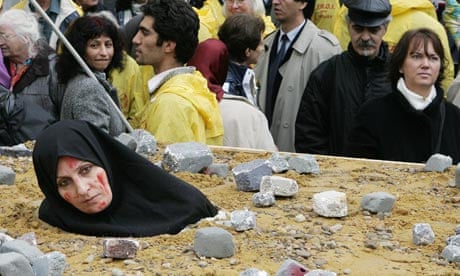
The Daily News reported in August that two young women in Syria in two separate incidents were stoned and bludgeoned to death because of alleged adultery.

In May 2014, a pregnant woman in Pakistan was stoned to death by her relatives and spurned finance as a crowd watched.  USA Today notes that the Lahore Police charged the young woman’s father with murder.  The father told police that he killed his daughter because she had shamed the family.

An Iranian woman protesting over death by stoning in Brussels

These cases are not limited to only developing countries.  Violence against women is on the rise globally.  Two women in separate incidents were attacked in the United States according to Think Progress.  “One woman in Detroit was shot and killed after refusing to give a stranger her phone number. Another woman in New York got her throat slashed for refusing to go on a date with a stranger.”

Women with disabilities are victims of violence more often than the rest of the population.  They are at higher risk for many reasons including ignorance, cultural and religious stigmas, discrimination and lack of family and social support.

According to the National Rape Response Service:

  • U.S. National studies estimate that almost 80% of people with disabilities are sexually assaulted on more than one occasion and 50% of those experienced more than 10 victimizations.
  •  Women with disabilities are raped and abused at a rate at least twice that of the general population of women.
  •  Among adults who are developmentally disabled, as many as 83% of the females and 32% of the males are victims of sexual assault.
  •  The UN believes that the best chance we have to end violence against women is to try and prevent it and address it at the structural and root causes.

The UN suggests two solutions:

  1. Education for prevention
  1. Working with men and boys

My husband and I have two grown children a son and daughter born with Down syndrome.  We taught our son to respect and honor women.  My husband also modeled good behavior so my son was lucky to have a positive role model.  Men and women must work together to find innovative ways to stop the senseless and brutal violence against women with and without disabilities.

For more information please visit:  www.RuhGlobal.com

Take Disability Travel Survey

Ruh Global Communications Logo

Ruh Global has created a survey for clients to determine travel preferences for people with disabilities and all stakeholders.  Please take this survey and pass to others to complete.  Thanks for helping us gather this critical data.  Our goals are to encourage hospitality and tourism to value, accommodate and include people with disabilities.  Please share and take the survey.  It is not only for people with disabilities but family members, friends and other stakeholders.

Take the Survey Here!


Follow Ruh Global Communications
To follow up on Debra Ruh’s current endeavors, follow her on social media: @DebraRuh or visit Ruh Global Communications

The ROI of Hiring Technologists with Disabilities

TecAccess Logo
TecAccess, Making the world of technology accessible
Debra Ruh, CEO of Ruh Global Communications, Founder of TecAccess

The ROI of Hiring Technologists with Disabilities

By Debra Ruh, Founder of TecAccess, CEO and Founder of Ruh Global Communications

Employers looking to gain a strategic edge may find that hiring technologists with disabilities provides an attractive return on investment.  Technologists with disabilities give everyone from private industry to educational institutions a way to improve the accessibility of their technology, hire a diverse workforce, and drive in more business by focusing on social responsibility and inclusion.

"ADA Requirements" in a laptop
“ADA Requirements” in a laptop

Individuals with disabilities represent a huge market segment and a large untapped workforce.  Additionally, with the recent amendments to the ADA and the updates coming soon to Section 508 of the Rehabilitation Act, technological accessibility needs to keep pace with the new legislation.  These developments will require employers to address accommodation issues in the workplace, something that can be helped by having employees with disabilities in high tech and management positions.

However, disability related myths can impede this process.  I worked with one large company that basically said, “We are going to decide what jobs can be done by persons with disabilities and then direct individuals with disabilities to those positions”.  But it’s not the place of the employer to determine what jobs people with disabilities can do.  An employer simply need to make sure that its HR systems and processes are fully accessible, and if a candidate applies and is qualified for the job, interview them and hire them to do the job.  Period.

Employers can make a wise investment in hiring technologists with disabilities.  A recent Department of Labor report indicated that workers with disabilities consistently meet or exceed the job performance of coworkers without disabilities.  One good example can be found in a Canon facility outside of Chicago that began refurbishing cameras.  They hired people with intellectual disabilities and the first year the program saved over $19 million.  They also noticed that the plant’s overall productivity increased at a higher rate than other locations.  Employees at the plant also reported increased morale and pride to work for the company.  Such intangibles can be valuable to employers seeking a competitive edge in the marketplace.

Follow Ruh Global Communications
To follow up on Debra Ruh’s current endeavors, follow her on social media: @DebraRuh or visit Ruh Global Communications

Mobile Phone and Accessibility

TecAccess Logo
TecAccess, Making the world of technology accessible
Debra Ruh, CEO of Ruh Global Communications, Founder of TecAccess

What type of mobile phone user are you?  Are you a Blackberry, Android, iPhone or another device?  I am still a Blackberry user and fairly happy but peeking over the fence at iPhone and Androids.  At first I stayed with the Blackberry because I travel internationally and they seemed to get better coverage.  Plus I work all the time (bad habit of mine) and Blackberry really met my needs.  However after I started using an iPad in May 2011, yes I was a slow adopter but thanks to Tim Springer I went to the other side and I really love my iPad.  I like it so much that now I am considering moving to the iPhone to replace my Blackberry.  Now I am not willing to give up my windows based Laptop but using all these devices together is sublime.

My daughter, Sara Ruh, using different Apple Products simultaneously. Sara has Down Syndrome and loves the Accessibility Features that Apple's Products offer
My daughter, Sara Ruh, using different Apple Products simultaneously. Sara has Down Syndrome and loves the Accessibility Features that Apple’s Products offer

I have a lot of choices however many people have very few choices because there are still a lot of accessibility problems with mobile phones not to mention the Digital Divide where many consumers cannot buy the latest device available.  It is discouraging to see my friends and family not having the same choices that I do because of accessibility issues.

In February CBS News did an article stating that the number of mobile phone subscriptions had reached 4.6 billion and was expected to hit 5 billion in 2011. It is critical that everyone have access to communications and technology and that includes people with disabilities.

“Mobile phone providers in rich countries offer advanced services and handsets, while people in developing countries increasingly use the mobile phone for health services and banking, said the International Telecommunication Union (ITU).  “Even during an economic crisis, we have seen no drop in the demand for communications services,” said the agency’s Secretary-General Hamadoun Toure.”  (1)

Accessibility Features on an iPhone. Image Thanks to AMAC Accessibility Solutions

Mobile devices are being used to access all kind of data including financial data.   “Between 500 million and 1 billion people will access financial services by mobile by 2015, depending on estimates. The MFS market will be dominated Asia, driven by mobile operator-led initiatives in developing nations to bank the unbanked. Remittance/transfers by mobile is growing three times faster than m-banking.” (2)

So what needs to be done to assure everyone can participate.   A good first step is to design the device following Universal Design and Accessibility Standards.   Blind, Vision Loss, Deaf, Hard of Hearing, Mobility Impairments, Intellectual Disabilities and the Elderly are impacted by inaccessible devices.

W3C logo. image from: wr.org

According to the W3C:

“More concretely, many of the mobile devices’ limitations match a number of well-known disabilities:

  • the small screen can easily induce pages with very small characters,
  • the limited viewport makes layout and browsing context changes as disturbing as for someone with limited vision,
  • the sometimes difficult lighting conditions (e.g. from using a phone screen under the sunlight) can make colors and contrasts as difficult to identify as for a person with colors perception problems,
  •  the lack of mouse matches the inability of some persons to use a mouse due to motricity difficulties,
  • likewise, the very limited and often hard-to-use keyboards available on mobile devices is evocative of the difficulties some persons with disabilities can have to interact with a keyboard
  • the social and mobility context of some mobile users make the use of some modalities (sound, video) for multimedia content inappropriate, matching the inability for some people to hear sounds or see images
  • in a mobile context, a user might have a very limited or patchy attention span, as someone with a cognitive disability might have
  • on mobile networks where time and cost are often limiting factors, being able to determine what an image is before it gets downloaded matters — at having such a description would help a blind user
  • the use of some technologies (plug-ins, scripts) might not be possible on a number of mobile devices, like they wouldn’t be usable with a number of assistive technologies” (3)

Everyone needs access to the internet, communications and technology.  I applaud companies that have made accessibility part of the development life cycle.  In the future, I will be blogging about some of these amazing best practices.

Follow Ruh Global Communications
To follow up on Debra Ruh’s current endeavors, follow her on social media: @DebraRuh or visit Ruh Global Communications

References and Footnotes

(1)    www.cbsnews.com/stories/2010/02/15/business/main6209772.shtml

(2)    http://mobithinking.com/mobile-marketing-tools/latest-mobile-stats

(3)   http://www.w3.org/WAI/mobile/