
Women with disabilities: Health care barriers by Rosemary Musachio

Rosemary Musachio, Chief Strategic Officer

Several years ago I asked my mom’s gynecologist if she could give me a routine pelvic examination.  She said she would have to put me under anesthesia to perform the exam because my cerebral palsy would not allow my body to hold still.  Although her reply was cordial, it made me feel demeaned, as if I was a second-class citizen.   Couldn’t she have her medical assistant hold my legs while she examined me?  In fact, that would have been a reasonable accommodation under the Americans with Disabilities Act (ADA).

This is the kind of treatment that women with disabilities usually face regarding their health care.  According to the Center for Research on Women with Disabilities (CROWD), we have more difficulty obtaining health care than non-disabled women.  The National Study of Women with Physical Disabilities supports this, stating that we are less likely to have pelvic exams than women without disabilities.

Besides attitudinal barriers, we also face physical obstacles in doctors’ offices and hospitals.  For example, when I get a mammogram, I have to become a contortionist.  I have to put one arm upright leaning against the mammography unit, hang on to the bar with the other hand, and rest my uplifted chin against the front of the machine.  Include the fact that my body has difficulty keeping still and this almost pain-free routine exam becomes a very uncomfortable feat.  Not only am I nervous about the mammogram results, I’m also afraid that I’ll bump my face against the machine.  My incidents are not unique.  Cases exist where women with disabilities were duct taped to mammography machines.  Besides the discomfort, an inaccessible mammography machine may cause unreadable x-ray images, for the patient may move and cause one or both breasts not to be x-rayed correctly.  Consequently, potential tumors may be overlooked.

Struggles that women with disabilities face regarding healthcare stems from several reasons.  (These reasons also can pertain to men with disabilities.)  First, many medical professionals are ignorant of who we really are.  Some think we must be asexual.  Because we cannot walk or we have muscle spasms, they assume we also cannot use our bodies to love others or procreate.  So they think our intimate organs do not need preventative or medical care. Some doctors suggest hysterectomies to eliminate the hassle of menstrual cycles, assuming we don’t have the desire to become mothers. If we get breast cancer, we may not be offered reconstructive surgery because many doctors don’t see us as having female bodies but as having disabled ones.

Lack of training also contributes to health care issues for us.  Take the GYN incident above.  If the doctor knew how to give an exam to a woman with cerebral palsy, she wouldn’t have suggested the anesthesia or refused medical care.  Medical professionals should know how to gently stretch a woman’s legs if they are spastic or place a woman with spinal conditions in comfortable positions during an exam.  These techniques should be taught in medical school.  The patient also could inform the medical professional about ways to make her feel comfortable and relaxed as possible while she is being examined.

Financial issues and logistics are other obstacles that women with disabilities have to overcome to receive proper healthcare.  Many women with disabilities are on Medicaid and Medicare, which deters physicians from accepting their cases.  CROWD reports that even if women with disabilities have private insurance, many insurance companies may not pay for specific prescriptions, procedures, therapies, or assistive devices.  As an example, insurance may not pay for estrogen therapy because it is not considered a medical necessity.

Although Title II and Title III of the ADA require medical facilities to have accessible medical equipment, many still are not complying.  It is like a double-edged sword.  Hospitals and doctors may not invest in such equipment because patients with disabilities are few, while we don’t go to these facilities because they lack accommodations.  An accessible gynecological exam table, for instance, that can be lowered for easy wheelchair transfers costs between $4,000 and $10,000.  While this is expensive, it can be offset with tax incentives.

27 million women in this country and 16% of the world’s women have some kind of disability.  As populations become older and live longer, many other women will develop debilitating conditions.  Medical facilities and professionals need to realize women with disabilities are not in the minority.  More importantly, they must know that we are needed as daughters, sisters, friends, wives, mothers, and productive members of society.  So proper healthcare is vital to help us continue fulfilling these roles.

Yet, the responsibility of obtaining health care also lies with us.  We should tell doctors, medical assistants, and nurses how they could assist us in receiving the best care possible.  If they refuse to comply, then we should seek legal or other public action to ensure that all women with disabilities get the care that they deserve.

 

Is global violence against women with and without disabilities on the rise?

Debra Ruh - CEO of Ruh Global Communications
Debra Ruh – CEO of Ruh Global Communications

According to the UN, violence against women has become a global epidemic.  There are many factors associated with the violence including cultural, religious, political and economic conditions.  According to the UN and WHO 1 in 3 women in the world have been beaten or raped.

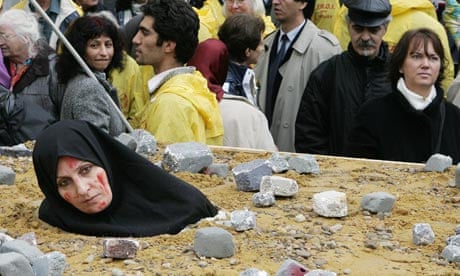
The Daily News reported in August that two young women in Syria in two separate incidents were stoned and bludgeoned to death because of alleged adultery.

In May 2014, a pregnant woman in Pakistan was stoned to death by her relatives and spurned finance as a crowd watched.  USA Today notes that the Lahore Police charged the young woman’s father with murder.  The father told police that he killed his daughter because she had shamed the family.

An Iranian woman protesting over death by stoning in Brussels

These cases are not limited to only developing countries.  Violence against women is on the rise globally.  Two women in separate incidents were attacked in the United States according to Think Progress.  “One woman in Detroit was shot and killed after refusing to give a stranger her phone number. Another woman in New York got her throat slashed for refusing to go on a date with a stranger.”

Women with disabilities are victims of violence more often than the rest of the population.  They are at higher risk for many reasons including ignorance, cultural and religious stigmas, discrimination and lack of family and social support.

According to the National Rape Response Service:

  • U.S. National studies estimate that almost 80% of people with disabilities are sexually assaulted on more than one occasion and 50% of those experienced more than 10 victimizations.
  •  Women with disabilities are raped and abused at a rate at least twice that of the general population of women.
  •  Among adults who are developmentally disabled, as many as 83% of the females and 32% of the males are victims of sexual assault.
  •  The UN believes that the best chance we have to end violence against women is to try and prevent it and address it at the structural and root causes.

The UN suggests two solutions:

  1. Education for prevention
  1. Working with men and boys

My husband and I have two grown children a son and daughter born with Down syndrome.  We taught our son to respect and honor women.  My husband also modeled good behavior so my son was lucky to have a positive role model.  Men and women must work together to find innovative ways to stop the senseless and brutal violence against women with and without disabilities.

For more information please visit:  www.RuhGlobal.com

I support the UN Campaign “HeForShe” Emma Watson launched by Kevin Ruh

Kevin Ruh - Chief Marketing Officer at Ruh Global Communications
Kevin Ruh – Chief Marketing Officer at Ruh Global Communications

My name is Kevin Ruh and I support the United Nations “HeForShe” campaign. I hope other men will join this conversation and show women that we support their rights to not be seen only as sexual objects. I believe that men are evolving. We need to raise our voices and show our support of women.

I was raised by a strong mother (Debra Ruh) and have a wonderful sister (Sara Ruh) born with Down syndrome. I am also proud to be in a committed relationship with another strong woman (Emily Ha).

Emily Ha - Chief Creative Officer at Ruh Global Communications
Emily Ha – Chief Creative Officer at Ruh Global Communications

I have seen men treat women as sexual objects or inferior beings – the weaker sex syndrome. It has always annoyed and angered me. I have debated this topic with many male friends and pondered what can be done to stop the violence. Men should never be violent for any reason. If you are in a bad relationship – step away – violence is never the answer. Women should be allowed to dress, walk, or act any way that they choose without fear of men preying upon them.
To make this situation even worse women with disabilities are often victims of violence and the statistics are very troubling. According to the National Rape Response Service:

U.S. National studies estimate that almost 80% of people with disabilities are sexually assaulted on more than one occasion and 50% of those experienced more than 10 victimizations.

Women with disabilities are raped and abused at a rate at least twice that of the general population of women.

Among adults who are developmentally disabled, as many as 83% of the females and 32% of the males are victims of sexual assault.

Source: www.MECASA.org

We must stop the senseless violence against women and people with disabilities.
I was intrigued by Emma Watson’s speech on this topic at the United Nations. Emma Watson is a household name for most. Her portrayal of Hermione Granger in the Harry Potter movies is where I was first introduced to this talented actor. She has gone on to do over fifteen films during her acting career.
More importantly though, are her efforts to help the human race. She has done a lot to help women’s rights over the years. Promoting the education of women is a huge issue. Watson has traveled the world to places like Zambia and Bangladesh to promote her views and aid the women’s rights movement. She believes in equality regardless of gender, I wholeheartedly agree with this and also believe it is a critical issue.
Watson was appointed the UN Women Goodwill Ambassador in July this year. In September she delivered an address that launched a new UN Women campaign called “HeForShe”. It is a program that asks for men to advocate for gender equality. Watson notes that it is impossible to see a change in the violence if only one side is advocating equality.

Emma Watson
Emma Watson

She is right – often this is a conversation being held by mostly women. It is time for men to join the conversation. We need to teach boys of all ages that a “Real Man” does not hurt anyone. Emma Watson’s efforts are being applauded globally.
Many Hollywood stars are self-proclaimed “feminists” and are often scrutinized for not practicing what they preach. Emma Watson is the image of a feminist who says equality is for all.Find out more about the “HeForShe” campaign here: www.HeForShe.org
I hope my brothers join me in my efforts to support women. Many of us are evolved and we need to stand with women and stop the violence. I challenge other men and parents raising sons to stand with me. It is Time to STOP the ABUSE.

Pic Source: http://www.eonline.com/news/581799/emma-watson-s-heforshe-gender-equality-campaign-gains-major-traction-in-hollywood