
Women leaders who are making a Difference – Featuring Joy Kniskern

Debra Ruh - CEO of Ruh Global Communications
Debra Ruh – CEO of Ruh Global Communications

I had the pleasure to interview Joy Kniskern for this blog.  Joy is an amazing woman with many talents.  She started her career determined to make a difference.  She has accomplished those goals and her efforts are going to making a difference for many years to come.   Joy is a shining example of a woman that believes that her success comes from helping other people succeed in life.

Joy has spent her entire career making a difference in other people’s lives.  She has also accomplished a lot academically including earning a Master’s Degree in Counseling & Psychological Services from Georgia State University and was honored with a Phi Chi Honor Society.  She also holds a Bachelors of Arts degree in Sociology from Vanderbilt University.

Joy works with Dr. Christopher Lee and his team at AMAC Accessibility Solutions and Research Center (AMAC).  AMAC is part of the Georgia Institute of Technology located in the College of Architecture.

I recently highlighted Dr. Lee in my blog about Leadership.  “Leaders Making a Difference in the World” Story of Dyslexia, Learning Disabilities and Finding his Greatness – Introducing Dr. Christopher M. Lee. To read the blog please visit: http://ow.ly/COCRX Here is my interview with the Joy Kniskern:

photo of Joy Kniskern
Joy Kniskern


Debra:  What led you to this field?

Joy: I wanted to contribute to the social good, and found rehabilitation was an area where so many people with disabilities wanted to go to work but encountered so many barriers – stigma, lack of training opportunities, physical access issues, no transportation.

Debra: What are some of the highlights of your career?

Joy: The first grant I received to establish, before ADA one of IBM’s Projects to give persons with disabilities skills to become COBOL computer programmers.  There was excellent involvement of private industry in every imaginable way, over 90% of graduates were hired at wages higher than staff within 3 months of graduation, I worked with first braille printers and speech output devices. I started a parallel program in customers’ service skills training so students who didn’t like or do well at programming had a path to good employment.

Debra: Tell me about our work with AMAC – what role do you play in this program?

Joy: I am the Technology Initiatives “go to” person at AMAC- I led several initiatives like our 508 and Accessible ICT work, special grants, and outreach to new and global partners.

Debra: AMAC is part of GA Tech, College of Architecture that is an interesting place to be located.  Do you think this provides an advantage to the AMAC program?

Joy:  Absolutely!  The College of Architecture is focused on design expertise and we are seeing that inclusive design is just as important as good and accessible design of physical spaces. AMAC started in 2006 as a production environment to meet the needs of students with disabilities through disability services providers within and outside of Georgia. Now that we are in the School of Architecture, we know that we have access to some of the finest research and academic resources in the world, and that fact and our action on it will help deepen and broader our path and impact on ICT accessibility in our digital world.

Debra: There is a lot of work to do across the US and globally to fully include PwD in the workforce and other aspects of society.  How can and should Universities be part of these solutions?  What steps are AMAC taking to also be a major part of the solution in US and abroad?

Joy: Research shows that to support the 9 million people in a world whose resources can support roughly half that number of people considering current consumption of goods and resources suggest that we all need to be engaged: governments, universities, thought leaders, environmental experts, in how to better engage everyone.  Universities like Georgia Tech can identify technology applications that make competitive work more possible. Robots and SKYPE make telework more possible, for example. There are many examples of how universities can be engaged in developing technologies and resourceful strategies to tap into talents of persons with disabilities.

Debra: AMAC has recently won several significant grants – can you highlight and explain the part you played in winning these grants?

Joy:  The First in the World Grant to establish Center for Accessible Materials Innovation (the Center) to expand access to higher education digital course content for students with disabilities, thereby supporting the improvement of their retention and graduation rates.

The proposed Center addresses the identified issues with an over-arching goal of expanding the availability and use of fully accessible textbooks for all students with disabilities, and for students at MSIs in particular, through four objectives:

(1) To develop applications to pioneer an innovative marketplace mechanism (a digital label) for the disclosure of standardized consumer information about the accessibility features of digital textbooks;

(2)  To provide textbook remediation services to increase the immediate availability of frequently used titles, especially those requested by students, and to use the tools created for Objective 1 to check accessibility and add to the pilot database of digital accessibility labels;

(3)  To research the causes of the seeming under-utilization of accessible textbooks by MSIs and to reverse this pattern with education and services; and

(4) To provide professional education and training on accessible electronic information for college faculty and staff including DSPs, administrators, content developers, curriculum procurement officials, and information technology managers.

AMAC, through partnerships with ATN members, publishers and AT vendors, will devise tools and applications to support the availability of consumer information through the creation of a standardized Document Accessibility Profile (DAP) for disclosing the specific accessibility features of digital textbooks. Similar to a nutrition label for packaged food, this “label” produced by an application or ‘app,’ will be created from a checklist of features enabled in the existing Online Information eXchange (ONIX) international standards used by book publishers and distributors. The “label” will be available on a web portal, and accessible from computers, tablets and mobile devices.

I designed and wrote the evaluation section of the proposal which includes an conducting focus groups at Minority Serving Institutions (MSI) focus groups to understand why the Digital Divide is much greater for minorities. We don’t have enough information about this issue to properly address it.

Debra: When you look towards the future of AMAC – what do you hope to see unfold?

Joy: My hope for AMAC is that it continues to unfold as the “go to” place for disability service providers and students they serve for digital access, and that we fully embrace the opportunities to make a difference in creating greater ICT accessibility in Georgia, the US and the world. We can play a significant role in reducing barriers related to access to information for people with disabilities. I also hope that we can sustain and strengthen allied efforts of the “Pass It On” Center for AT Reutilization, a national technical assistance center, and resources to grow our capacity for Georgia’s State AT Act Program – Tools for Life.

Debra: When you look back on your career in the future – what do you hope to see?

Joy: You know, it’s not about my career, it’s about my contribution to making the world a little better. That is what matters.

Debra: What advice do you have for young people that are interested in following your footsteps?

Joy: Look toward the highest good in everyone you encounter, do your best, and do what matters most, and take time to step aside and reflect on what is going on in your life, and those of others around you.

Debra:  What are you most proud of in your career?

Joy:  When I was 27, taking a risk by stepping out of the status quo early in my career to find funding and launch the Georgia Computer Programmer Project.  One of my students retired making a six figure income after 20 years of employment with a well-known software company. It started me on a path of social entrepreneurship that I’ve mastered ever since then.  ***End of interview***

Speaking to Joy is a breath of fresh air.  She has accomplished so much during her career and she is still going strong and changing the world.  I look forward to watching her career continue to unfold.  She is a woman that has made a huge difference in the world.  Joy Kniskern is global role model for us all.

For more information about Ruh Global Communications please visit: www.RuhGlobal.com


Are scientific & technological advancements only for the wealthy?

Debra & Sara Ruh
Debra & Sara Ruh

Science and medical technology advancements are helping people with disabilities see, hear and walk again. In a recent BBC article Cyborgs: The truth about human augmentation reveals exciting technology and scientific advances that are augmenting people’s lives. Exciting times for people with disabilities assuming you have the means to pay for these life-changing advancements. Let’s look at a few examples:

Bionic Eye

photo of a woman with a Bionic eye
Bionic eye

Another BBC Article is about Argus II or the Bionic Eye: I am Blind…now I have Bionic Eyes. It is a system that includes three parts: glasses, converter box and an electrode array. The glasses have attached a camera and they transmit images to the converter box. The converter box sends signals to the electrode array that was implanted on the retina.


What is it like to see again after years of blindness? Fran Fulton’s sight was restored with a remarkable new eye implant, price tag: $150,000.
Bionic Ear

Ear Diagram
Ear Diagram

The bionic ear is being credited as the first device to replace a sensory organ. The ‘bionic ear’: the couple who helped the world to hear explores the topic. A cochlear implant or Bionic Ears is a small, complex electronic device that can help provide a sense of sound to people that are deaf or hard-of-hearing.


The Computerized Exoskeleton Could Help Millions of People Walk Again. ReWalk is a wearable robotic exoskeleton that provides powered hip and knee motion allowing individuals with Spinal Cord Injury walk.

Gene Laureano walks with the aid of ExoSkelton made by ReWalk, price tag: $69,500

Picture of the ReWalk
ReWalk

These scientific and medical breakthroughs are changing people’s lives. The problem is that these advancements are out of reach for millions of people. The good news is that we have the funding, knowledge, and the social drive to eliminate many of the barriers.
Here are a few programs bringing scientific and medical advancements to people in developing countries.

World Wide Hearing provides access to affordable hearing aids to youth in developing countries.
Fred Hollows Foundation has helped restore the sight of more than 1,000,000 people worldwide.
The Nippon Foundation is assisting with the operation of schools to train them, in the hope of restoring the mobility and independence of persons with disabilities in Southeast Asia.
Clinton Foundation and Standard Chartered Bank expand their fundraising and eye care programs to help reach the International Agency for the Prevention of Blindness and WHO’s VISION 2020 initiative to eradicate avoidable blindness globally by 2020.

Society needs to expand on these types of programs to assure these advancements are available to more people in the future.

To learn more about our work please visit: www.RuhGlobal.com
Accessibility and how we can adapt to a new way of thinking by Kevin Ruh

Kevin Ruh - Chief Marketing Officer at Ruh Global Communications
Kevin Ruh – Chief Marketing Officer at Ruh Global Communications

The changing landscape of accessibility across the globe will be a huge factor that influences technology advancements. The World Health Organization has identified persons with disabilities as the fastest growing minority group. With the Baby Boomers reaching the age where mobility becomes tougher and tougher we will see a huge shift in accessibility. There is no way that things can remain the same, with such a large  part of the population needing accessibility in a way they have not before. We need to make our city streets wheelchair accessible, even this task sounds daunting.

While the changes may seem to be difficult to make, never the less, we need to make them and soon. This is just the tip of a very large iceberg that we are viewing from the surface of the water, unfortunately the hidden part is just as important as the visible part. With everyday changes and preparations we can be ready for mobility in the world even if our bodies have trouble with some difficult tasks. The world view on disability needs to shift into one that we consider in our day to day operations. With the world becoming more digital by the second and with things like the digital-divide to consider technology is under the scope for scrutiny. Technology is a part of life and has enriched life for most of the population. We simply need to consider who has been left out of thought, if anyone has, and then help them to join in. This can be done with simple technology like phone keyboards that are predictive and user friendly. User-friendly becomes very important and if we consider all different users it becomes easy to make accessible. ”Technology is accessible if it can be used just as effectively by people with disabilities as it can by those without.” Debra Ruh writes.

This is so true and accessibility is vital, but it should be part of our thinking while designing and not an afterthought. After all, we create minorities that are not represented when we leave some as an afterthought. We can be a prosperous global society that includes all communities, because everyone working together adds value in a way that working against one another we never could.

Can our greatest teachers be persons born with disabilities?

Debra & Sara Ruh
Debra & Sara Ruh

So many people are sad and have lost their ability to find the simple joys in life.  My Mom is one of those people and as she has aged she has become more and more negative and sad.  She has always been the half-empty type person but when we lost my Dad last year her filters went with him.  She struggles seeing the world as a good place and often gets lots in the darkness.

I try to gently remind her of all the joys and wonders all around her.  Instead she tells me that I am in denial about the sad state of the world.  She also thinks that I should lose the Rose Colored Glasses.  I love her and will always be there for her but her view of the world makes me sad.  I see the world as such an amazing place and as I get older want to continue to contribute to the world.

I have been blessed by a happy marriage for over 32 years and we have two grown children – Sara and Kevin.  Our oldest daughter Sara was born with Down syndrome and we named her after my mother.  Everywhere we looked we were told the dark, negative stories associated with raising a child with disabilities.  We decided the experts were wrong and proceeded to prove them wrong.

Our beautiful, loving, joyful and simply amazing daughter has been a great teacher to us.  She lives the great spiritual truths: “stay in the moment”, “see the good in everyone”, and “Life is about Love”.  I also practice these truths but it is truly a walk in faith sometimes.  If our intelligence was measured on how a person lives the greatest spiritual truths – Sara would be a great sage.

Sara and Kevin
Sara and Kevin

Sara’s brother Kevin has also been positively impacted by his sister.  Read his blog “Lessons Learned From my Sister” http://ow.ly/COnrj

Sara has inspired my work and I have spent the last twenty years in the disability field working hard to empower persons with disabilities (PwD).  I have worked with countries all over the world to create programs and policies to include PwD in every aspect of society with an emphasis on the workforce.  I have had the pleasure to work with huge corporations (national and multi-national) to help them understand how to include this segment of the population in their workforce and marketing efforts.  According to the World Health Organization (WHO) 1 in 7 people are impacted with a disability.  In the United States 1 in 3 families are impacted.  Source: NOD

Disability is part of life and we all will experience disabiity in our life times.  As we age more of us are acquiring disabilities.  I have worked hard to shine a different light on disabilities.  Instead of seeing it as a tragedy – we should realize it is part of life.  Obstacles allow us to find our greatest strengths and treasures in life?

My Mom has been a great teacher to me and she has been trying her entire life to manage her mental illness.  Life is tough for her and I try to be authentic with her and love her regardless of her negative view of the world.  I have heard experts say to stay away from negative people but at this time in my Mom’s life she needs me.  So I try to be authentic with her and try not to make her walk more difficult.

I view her negative lens of the world as an inspiration for me to always be grateful and see beauty in all things.  Maybe it is a defense mechanism but I have become a better person because of my Mom.

I also believe we can learn a lot from people like our daughter Sara Ruh.  She inately seems to understand the value of staying in the moment.  Eating when she is hungry, sleeping when she is tired (no matter where she is – smile), and staying 100% in the moment and fully authentic.  She is an amazing soul and I am so blessed to be part of her life.  Both the Sara’s in my world – my Mom and my Daughter have been great teachers and gifts to me.

To learn more about our work, please visit: www.RuhGlobal.com

Is global violence against women with and without disabilities on the rise?

Debra Ruh - CEO of Ruh Global Communications
Debra Ruh – CEO of Ruh Global Communications

According to the UN, violence against women has become a global epidemic.  There are many factors associated with the violence including cultural, religious, political and economic conditions.  According to the UN and WHO 1 in 3 women in the world have been beaten or raped.

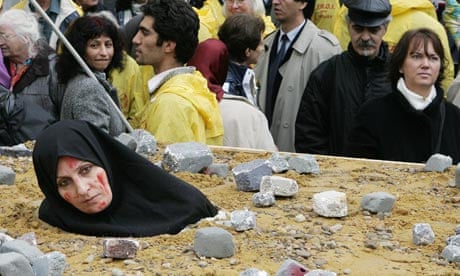
The Daily News reported in August that two young women in Syria in two separate incidents were stoned and bludgeoned to death because of alleged adultery.

In May 2014, a pregnant woman in Pakistan was stoned to death by her relatives and spurned finance as a crowd watched.  USA Today notes that the Lahore Police charged the young woman’s father with murder.  The father told police that he killed his daughter because she had shamed the family.

An Iranian woman protesting over death by stoning in Brussels

These cases are not limited to only developing countries.  Violence against women is on the rise globally.  Two women in separate incidents were attacked in the United States according to Think Progress.  “One woman in Detroit was shot and killed after refusing to give a stranger her phone number. Another woman in New York got her throat slashed for refusing to go on a date with a stranger.”

Women with disabilities are victims of violence more often than the rest of the population.  They are at higher risk for many reasons including ignorance, cultural and religious stigmas, discrimination and lack of family and social support.

According to the National Rape Response Service:

  • U.S. National studies estimate that almost 80% of people with disabilities are sexually assaulted on more than one occasion and 50% of those experienced more than 10 victimizations.
  •  Women with disabilities are raped and abused at a rate at least twice that of the general population of women.
  •  Among adults who are developmentally disabled, as many as 83% of the females and 32% of the males are victims of sexual assault.
  •  The UN believes that the best chance we have to end violence against women is to try and prevent it and address it at the structural and root causes.

The UN suggests two solutions:

  1. Education for prevention
  1. Working with men and boys

My husband and I have two grown children a son and daughter born with Down syndrome.  We taught our son to respect and honor women.  My husband also modeled good behavior so my son was lucky to have a positive role model.  Men and women must work together to find innovative ways to stop the senseless and brutal violence against women with and without disabilities.

For more information please visit:  www.RuhGlobal.com

Down syndrome and Alzheimer’s – Can a vegan diet help? by Kevin Ruh

Kevin Ruh - Chief Marketing Officer at Ruh Global Communications
Kevin Ruh – Chief Marketing Officer at Ruh Global Communications

Alzheimer’s disease is one of the scariest ailments facing mankind today.  The idea of not being in total control of your mind is a prospect most cannot fathom.  Many will be negatively and personally impacted in our lifetimes by this scary disease.  With the large generation of the baby boomers (76 million Americans) beginning to come of age, this threat becomes more and more frightening.  To add to the problems recent studies show that people with Down syndrome have a much higher rate of developing Alzheimer’s and as early as their forties.

According to a recent article: Increasingly, Adults with Down Syndrome Face Alzheimer’s  “Adults with Down syndrome are at high risk for developing Alzheimer’s disease, and at an earlier age than the population as a whole. At least 25 percent of those older than 40 have Alzheimer’s, and more than 50 percent of those over 60 do, compared with 6 percent of those over 60 in the overall population.” Source: National Task Group on Intellectual Disabilities and Dementia Practices

My older sister, Sara, was born with Down syndrome makes these statistics even more troubling.

I have been a vegan for over ten years and Debra, my mother has been an on again off again vegan and vegetarian for years.  Our family exercises and tries to eat healthy diets.  Like many other Americans our family tree includes diseases like cancer, heart disease, high blood pressure, strokes and diabetes.

We all realized that Sara’s best change might come from a dramatic change in Sara’s diet.

Debra was worried even before her own mother had an accident and was diagnosed with dementia.  We began looking into the topic and trying to see what could help those we loved.  We read several studies that show diet plays a very big part in disease prevention.

When my mother saw the studies about Down syndrome and Alzheimer’s she remembered the work that Dr. Neal Barnard has done on Vegan diets and Alzheimer Disease. Barnard has been researched how a vegan diet can reduce your risks for many diseases including cancer, diabetes, heart disease, strokes and Alzheimer.

Barnard writes a blog on The Physicians Committee on Responsible Medicine website. In his blog: Eating to Prevent Alzheimer’s disease he notes that a vegan diet can reduce the risks associated with these diseases.  One reference: “The Ninth Annual Conference on Alzheimer’s Disease and Related Disorders, Harvard researchers discussed the role that fruits and vegetables may play in AD. Jae Hee Kang, Sc.D., and colleagues evaluated approximately 13,000 participants in the Nurse’s Health Study.   They calculated the women’s intake of fruits and vegetables between 1984 and 1995 and correlated these values with performance on tests of cognitive function conducted between 1995 and 2003, when the women were in their 70s. Women with the highest consumption of green leafy vegetables and cruciferous vegetables—both high in folate and antioxidants such as carotenoids and vitamin C—declined less than women who ate little of these vegetables.”

So the rest of my family including Emily Ha of Ruh Global Communications have committed to Dr. Barnard’s recommended 21 Day Kickstarter Vegan Diet.  On 10/3/2014 they began a diet that is free of animal products for twenty-one days.

Dr. Neal Barnard
Dr. Neal Barnard

With some help from a health and exercise coach, Jo Beardsley at American Family Fitness we are all going to help Sara to lose weight healthily with the goal to significantly lower her risk of developing Alzheimer’s.

Sara eats a healthy diet now, but with this pledge, we stack the odds in her favor by eating her healthiest diet available.  The rest of our family is also committing to eating the same way.  We all want to see an end to these horrible diseases.

Emily will be keeping a blog tracking the journey that provides recipes for Debra and Sara to check daily with ideas for meals and other information.

The blog is at Rawesomeveganrecipes.tumblr.com and will include many raw vegan recipes too.  Join us as we focus on Sara’s journey. We also welcome your stories and recipes.

I support the UN Campaign “HeForShe” Emma Watson launched by Kevin Ruh

Kevin Ruh - Chief Marketing Officer at Ruh Global Communications
Kevin Ruh – Chief Marketing Officer at Ruh Global Communications

My name is Kevin Ruh and I support the United Nations “HeForShe” campaign. I hope other men will join this conversation and show women that we support their rights to not be seen only as sexual objects. I believe that men are evolving. We need to raise our voices and show our support of women.

I was raised by a strong mother (Debra Ruh) and have a wonderful sister (Sara Ruh) born with Down syndrome. I am also proud to be in a committed relationship with another strong woman (Emily Ha).

Emily Ha - Chief Creative Officer at Ruh Global Communications
Emily Ha – Chief Creative Officer at Ruh Global Communications

I have seen men treat women as sexual objects or inferior beings – the weaker sex syndrome. It has always annoyed and angered me. I have debated this topic with many male friends and pondered what can be done to stop the violence. Men should never be violent for any reason. If you are in a bad relationship – step away – violence is never the answer. Women should be allowed to dress, walk, or act any way that they choose without fear of men preying upon them.
To make this situation even worse women with disabilities are often victims of violence and the statistics are very troubling. According to the National Rape Response Service:

U.S. National studies estimate that almost 80% of people with disabilities are sexually assaulted on more than one occasion and 50% of those experienced more than 10 victimizations.

Women with disabilities are raped and abused at a rate at least twice that of the general population of women.

Among adults who are developmentally disabled, as many as 83% of the females and 32% of the males are victims of sexual assault.

Source: www.MECASA.org

We must stop the senseless violence against women and people with disabilities.
I was intrigued by Emma Watson’s speech on this topic at the United Nations. Emma Watson is a household name for most. Her portrayal of Hermione Granger in the Harry Potter movies is where I was first introduced to this talented actor. She has gone on to do over fifteen films during her acting career.
More importantly though, are her efforts to help the human race. She has done a lot to help women’s rights over the years. Promoting the education of women is a huge issue. Watson has traveled the world to places like Zambia and Bangladesh to promote her views and aid the women’s rights movement. She believes in equality regardless of gender, I wholeheartedly agree with this and also believe it is a critical issue.
Watson was appointed the UN Women Goodwill Ambassador in July this year. In September she delivered an address that launched a new UN Women campaign called “HeForShe”. It is a program that asks for men to advocate for gender equality. Watson notes that it is impossible to see a change in the violence if only one side is advocating equality.

Emma Watson
Emma Watson

She is right – often this is a conversation being held by mostly women. It is time for men to join the conversation. We need to teach boys of all ages that a “Real Man” does not hurt anyone. Emma Watson’s efforts are being applauded globally.
Many Hollywood stars are self-proclaimed “feminists” and are often scrutinized for not practicing what they preach. Emma Watson is the image of a feminist who says equality is for all.Find out more about the “HeForShe” campaign here: www.HeForShe.org
I hope my brothers join me in my efforts to support women. Many of us are evolved and we need to stand with women and stop the violence. I challenge other men and parents raising sons to stand with me. It is Time to STOP the ABUSE.

Pic Source: http://www.eonline.com/news/581799/emma-watson-s-heforshe-gender-equality-campaign-gains-major-traction-in-hollywood

Social Media Response by Kevin Ruh

Kevin Ruh - Chief Marketing Officer at Ruh Global Communications
Kevin Ruh – Chief Marketing Officer at Ruh Global Communications

I am an advocate of using social media to bring awareness about the community of people with disabilities (PwD) and accessible Internet, Communications and Technology (ICT). I believe that the community of PwD is starting to find their voices via social media. However, there are some significant accessibility problems with social media. There are leaps in accessibility that have been made and are in progress. Yet we find that many social media tools and applications are not blending accessibility into their products and when they are, it does not seem to be a priority. PwD are often left out of the social media conversation and movement because the devices are less accessible.

We find that many social media tools and applications are not blending accessibility into their products. PwD are often left out of the social media conversation because they apps are inaccessible. This is difficult to deal with due to the fact that most don’t seem to have accessibility in mind until there is a problem, instead the devices and applications need to be thought of as opportunities for universal access.
Social media has to be accessible or we continue to widen the Digital Divide, it is as simple as that. As long as there are access problems we run the risk of alienating a portion of our community.
The Internet has opened up many opportunities as well as greatly improving the quality of life for these users, but there are still barriers. Many people think of disabilities in extreme terms such as blindness and deafness, but it also includes many others with visual or hearing impairments that are increasingly common in our aging population, and other challenges such motor and cognitive impairment. The spectrum of ability for all users is variable.

Can an organization really afford to lose this audience?

I think not, and this community is chattering on more accessible platforms, about the good and the bad. If social media tools are not accessible those platforms stand to lose out on major benefits, or risk being singled out as not worried about the less able part of the population and their advocates.

Sometimes we hear that it is too hard to make an application or platform accessible. This makes sense only if the organization wishes to put forth the message that their customers are not worth a re-tool of an app. Accessibility should be built into the system similarly to building in privacy, security or usability. The second thought of accessibility as “not an easy add on” and will be noticed by those left out.
The good news is that Social Media applications can be made fully accessible allowing everyone to use them; all aspects of use just need to be considered.

In years past, developers were afraid that making the application accessible would make a system less creative or innovative or other security issues. The good news is we have seen amazing strides with accessible social media and now it is innovative developers take pride in blending accessibility into the process level. This seems to be the future of technology and it should be our end goal to reach universal access.

Is participation for all out of the question? If we don’t make social media accessible than we continue to widen the “Digital Divide” and according to the World Health Organization (WHO) one in seven people are impacted with disabilities worldwide. Plus 1 out of 3 households in the U.S. are impacted by disabilities, there for this is an issue that affects family and community. Worldwide, this group numbers 500-750 million people and is a key influencer of the public’s perceptions.

There is no excuse to not make your Social Media applications fully accessible so that everyone can use them. In years past, developers were afraid that making the application accessible would make a system less usable or “dumbing” the system down. Once again, ridiculous – we have seen amazing strides with accessible social media and now it is BAD design if you do not blend accessibility into the process level.

Apple iPhone 6, innovative as long as it is accessible By Kevin Ruh

Kevin Ruh - Chief Marketing Officer at Ruh Global Communications
Kevin Ruh – Chief Marketing Officer at Ruh Global Communications

Finding new aspects to accessibility within the new devices that are forthcoming is exciting and sometimes troubling if accessibility has not been consider. With the recent release of the Apple iPhone 6 questions loom about the added features that make this new device unique and innovative can also cause accessibility concerns.
The screen is slightly larger for the new edition of the iPhone. A larger screen is good for users with a visual impairment as it is simply easier to see. A person with fine motor impairment can make navigating a tiny touch screen accurately very difficult. In that case a larger screen can be an upside to the user. Users that manage the small motions fine may find the larger strokes create a challenge and find it cumbersome. Limited motion due to size has caused some users to criticize the iPad.
The battery life has been improved on the iPhone 6. This is usually seen as a positive to all users. Especially when the user uses their device as communication device or as assistive technology. Longevity is also a huge benefit to everyone but is especially helpful to consumers with disabilities and anyone that needs the device to be accessible.

iPhone 6.0 1
iOS 8 has strived to be an accessible operating system and has accessibility features that previous iOS’s versions inspired. The new iPhone 6 will run iOS 8 when it is released which many hope will include access features that have not yet been announced.
The new OS also promises to run the new Apple Pay, which is a new type of program that is striving to replace credit cards entirely. The accessibility implications of this are numerous. The idea is to use your iPhone to securely transfer money is one that is astounding and would allow many of us easier access to monetary transactions. When the iWatch is released it may too have many accessibility accomplishments that we have yet to imagine. These devices show that accessibility can be a great way to widen the use of mobile technology for all.

Apple has been a leader in accessibility and their innovation has change lives. I hope they continue to blend accessibility into every device, app and service that is offered.

Introducing Dr. Christopher M. Lee in “Leaders Making a Difference in the World” : A Story of Dyslexia, Learning Disabilities and Finding his Greatness

Debra Ruh - CEO of Ruh Global Communications
Debra Ruh – CEO of Ruh Global Communications

I believe that the best way to further inclusion of persons with disabilities is to tell the stories of the organizations and leaders that are making a difference.  Progress is being made all over the world and I want to highlight efforts coming out of Atlanta, Georgia.  I have had the pleasure to collaborate with Dr. Christopher Lee and his team at AMAC Accessibility Solutions and Research Center (AMAC).  AMAC is part of the Georgia Institute of Technology located in the College of Architecture.

Dr. Christopher Lee has been an advocate and pioneer in promoting social entrepreneurship to benefit humankind and further strive for sustainable social change in the field of disabilities.

Why does Dr. Lee care about the community of persons with disabilities?  He is part of the community and was diagnosed with a cognitive deficit disorder in the second grade.  He was placed in special education and speech classes.

Dr. Lee describes his dyslexia in this way: “Nothing I hear seems to stick with me and nothing I say seems to come out right.  It is as though I am in a world where the air is packed with floating symbols.  I watch as everyone swallows the symbols, digesting them to produce something that everyone else understands, but I can only swallow bits and pieces.  Choking, I remain hungry in my struggle to find a way to communicate and comprehend effectively.”

He recalls being a student and standing in front of the classroom, he did his best to recall the ways to spell, to read and to say the right words and phrases.  He understood that he needed to recall and use the words and phrases in the correct order to be able to connect and communicate with his peers and teachers.

He spent hours organizing his thoughts and preparing for presentations in front of his classmates.  He tried to find ways to help him get his thoughts across to his peers and teachers.  The efforts left him feeling very alone and frustrated, and in his mind and heart he longed to decipher the code of language.

Most people say that it is the intellect which makes a great scientist. They are wrong: it is character.Albert Einstein

Dr. Lee has built a lot of character and drive to make the world a better place for individuals with learning disabilities and other disabilities.  He admits to being a perfectionist and he worked very hard to fit in and succeed in a world that is not set up for his “twisted perception of language.”

He was determined to go to college and scored low scores on his SAT due to his severe visual and audio process disorders.  He had to work his way through developmental studies before he was mainstreamed at the University of Georgia (UGA).

“With everything that has happened to you, you can either feel sorry for yourself or treat what has happened as a gift. Everything is either an opportunity to grow or an obstacle to keep you from growing. You get to choose.” Wayne W. Dyer

He notes that his story is not unique from the high percentage of people in the United States and all over the world who are also dealing with learning disabilities.  This story is experienced by parents and teachers globally.  Many “experts” expected him to fail, but he worked hard and decided to become a success story and a beacon of hope for others with learning disabilities.

His motivation to become a collegiate swimmer athlete at UGA drove him hard to create his own academic action plan which included strategies, tools like assistive technology, and most importantly, a strong tutoring and mentoring network.

He also developed a communication strategy that included the use of role-playing activities where he perfected how to disclose his learning disabilities.  He became an expert in and promoting his strengths and managing his weaknesses.

Today he holds multiple college degrees including a Bachelor of Arts and Sciences in Speech Communication from University of Georgia.  He also earned a Ph.D. in Interdisciplinary Studies with a focus on Social Psychology from Union Institute and University.

His work has centered on the innovation of new models and techniques to support accessible electronic information in corporate, governmental and nonprofit entities. Dr. Lee is an internationally recognized advocate, author, speaker, principal investigator and leader in the fields of learning disabilities and assistive technology.

In1992, at age twenty-three Christopher wrote his first book, Faking It: A Look into the Mind of a Creative Learning.  This book can be purchased on Amazon by following this link:  http://ow.ly/Avs8V

In 2003, he was highlighted in Microsoft “Accessible Technology for Everyone”, a Microsoft video and publication.  http://www.microsoft.com/enable/

In 2007, he was featured in the PBS series “A Chance to Read”, hosted by Molly Ringwald, which highlights new strategies driven by emerging research that shows what’s happening across the country to help children with disabilities find success.    https://www.youtube.com/watch?v=Us8-tG6R024

Today Dr. Christopher Lee is the Founder, Director and Department Head of the AMAC Accessibility Solutions and Research Center (AMAC), located in the College of Architecture of the Georgia Institute of Technology in Atlanta.  AMAC is committed to promoting technological innovation and developing effective user-centered products and services for individuals with disabilities.

AMAC’s mission is to address unmet accessibility needs in government, non-profits, and corporations by providing products that benefit those with physical or cognitive impairments.  AMAC has pioneered a cost-effective, replicable, scalable, full service center for alternative, digital and captioned media for college students with disabilities, along with the downloadable assistive technology software.  AMAC receives baseline operational funds from the University System of Georgia (USG).

AMAC services and costs vary depending on the annual membership status of its 2,287 participating institutions. AMAC offers a variety of services to meet the individual needs of students with print-related disabilities and post-secondary institutions.

Christopher has been recognized for his advocacy and leadership many times and most recently was awarded a “Campus Technology Innovators Award for 2014”.  AMAC was also awarded a coveted “Zero Project Award 2013” from The World Future Council and the European Foundation Centre.

To learn more about Dr. Christopher Lee’s work, please visit AMAC at http://www.amacusg.org/

To learn more about Ruh Global Communications, please visit www.RuhGlobal.com